Musical Instruments
Iran
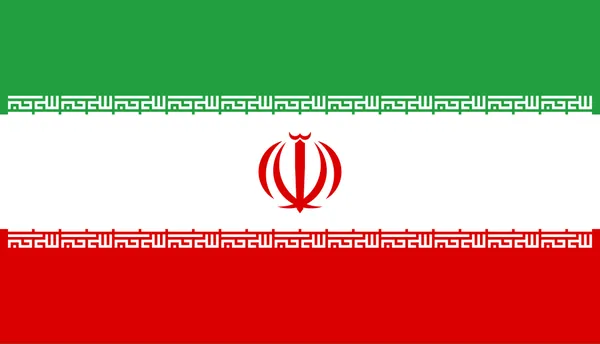
Iran, officially the Islamic Republic of Iran, and historically known as Persia, is a country in West Asia. It borders Iraq to the west; Turkey, Azerbaijan, and Armenia to the northwest; the Caspian Sea to the north, Turkmenistan to the northeast; Afghanistan to the east; Pakistan to the southeast; and the Gulf of Oman and the Persian Gulf to the south. With a population of over 92 million, Iran ranks 17th globally in both geographic size and population. It is divided into five regions with 31 provinces. Tehran is the nation's capital and largest city and serves as its primary economic center. Home to one of the world's oldest continuous major civilizations, the territory of present-day Iran was first unified under the Medes in the 7th century BC and reached its territorial height in the 6th century BC, when Cyrus the Great founded the Achaemenid Empire. Alexander the Great conquered the empire in the 4th century BC. An Iranian rebellion in the 3rd century BC established the Parthian Empire, which later liberated the country. In the 3rd century AD, the Parthians were succeeded by the Sasanian Empire, which oversaw a golden age in the history of Iranian civilization. Ancient Iran saw some of the earliest developments of writing, agriculture, urbanization, religion, and administration. Once a center for Zoroastrianism, Iran underwent Islamization following the 7th century Muslim conquest. Innovations in literature, philosophy, mathematics, medicine, astronomy and art were renewed during the Islamic Golden Age and Iranian Intermezzo, a period during which Iranian Muslim dynasties ended Arab rule and revived the Persian language. This era was followed by Seljuk and Khwarazmian rule, Mongol conquests and the Timurid Renaissance from the 11th to 14th centuries. In the 16th century, the native Safavid dynasty re-established a unified Iranian state with Twelver Shia Islam as the official religion, laying the framework for the modern state of Iran. During the Afsharid Empire in the 18th century, Iran was a leading world power, but it lost this status after the Qajars took power in the 1790s. The early 20th century saw the Persian Constitutional Revolution and the establishment of the Pahlavi dynasty by Reza Shah, who ousted the last Qajar Shah in 1925. Following the Anglo-Soviet invasion of Iran in 1941, his son Mohammad Reza Pahlavi rose to power.
Also on this shelf
Khushtar.
Festál.
See also
Uncatalogued shelfText from Wikipedia; plate via Wikimedia Commons. Text CC BY-SA 4.0; plate freely licensed (see Commons). Source record. Images and catalogue data are reproduced from open-access collections.