Musical Instruments
Franco Luambo
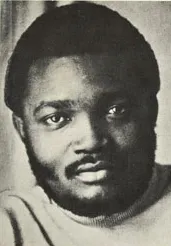
François Luambo Luanzo Makiadi (6 July 1938 – 12 October 1989) was a Congolese guitarist, singer-songwriter, bandleader, and cultural revolutionary. He was a central figure in 20th-century Congolese and African music, principally as the bandleader for over 20 years of TPOK Jazz, the most popular and influential African band of its time. He is referred to as Franco Luambo or simply Franco. Known for his mastery of Congolese rumba, he was nicknamed by fans and critics "Sorcerer of the Guitar" and the "Grand Maître of Zairean Music", as well as "Franco de Mi Amor" by female fans. AllMusic described him as the "big man in African music". His extensive musical repertoire included social commentary on love, interpersonal relationships, marriage, decorum, politics, rivalries, mysticism, and commercialism. In 2023, Rolling Stone ranked him at number 71 on its list of the 250 Greatest Guitarists of All Time. Born in Sona-Bata in Kongo Central and raised in Kinshasa, Luambo was mentored in his youth by Congolese musicians Paul Ebengo Dewayon and Albert Luampasi, who helped introduce him to the music industry. He initially performed with Luampasi's band, Bandidu, alongside Dewayon, and later worked with Dewayon's band Watam, under the auspices of the Loningisa label, managed by Greek music executive Basile Papadimitriou. After a successful audition for producer Henri Bowane, Luambo was signed to a long-term contract by Loningisa. In 1954, he joined LOPADI (Loningisa de Papadimitriou), during which period Bowane began calling him simply "Franco". Luambo co-founded OK Jazz in 1956, which emerged as a defining force in Congolese and African popular music. As the band's lead guitarist, Luambo developed a distinctive style characterized by polyrhythmic sophistication and intricate multi-string plucking, laying the foundation for what became known as the "OK Jazz School". His innovative approach to the sebene, which positioned it at the song's climax and incorporated a syncopated thumb-and-forefinger plucking technique, revolutionized the genre and became central to the band's sound. This style was deeply rooted in rumba odemba, a rhythmic and melodic tradition emanating from the Mongo people of Mbandaka.
Also on this shelf
Betts House (Yale University).
Accompaniment.
See also
Uncatalogued shelfText from Wikipedia; plate via Wikimedia Commons. Text CC BY-SA 4.0; plate freely licensed (see Commons). Source record. Images and catalogue data are reproduced from open-access collections.