Musical Instruments
Chenda
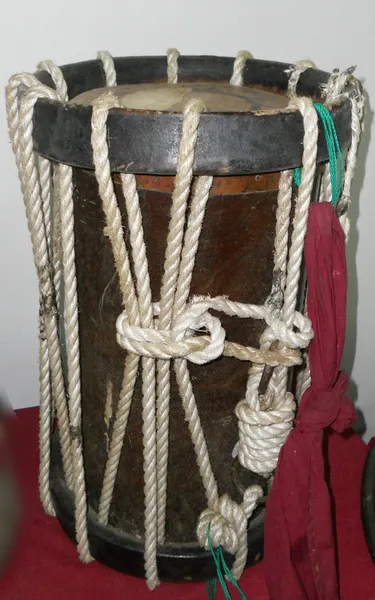
The Chenda (Malayalam: ചെണ്ട, [tʃeɳʈa]) is a cylindrical percussion instrument originating in the state of Kerala and widely used in Tulu Nadu of Karnataka in India. In Tulu Nadu (Coastal Karnataka), it is known as chende. The instrument is strongly associated with the cultural identity of both Kerala and Tulu Nadu. Traditionally, it is used by the Malayar ethnic groups in Kerala. According to their beliefs, Lord Shiva blessed them with both the chenda and matravadham, which are considered synonymous in their mantravadha tradition, where sound plays a central role. This instrument is famous for its loud and rigid sound. A Chenda has two sides, the left side called "Edamthala" (ഇടം തല)(Left Head) and the right side "Valamthala" (വലം തല)(Right Head). The "Edamthala" is made of only one/two layer of cow skin and the "Valamthala" will have a five/seven layer skin, so as to have a bass sound. The skin are dried in the shade and fastened on wooden rings (Chenda Vattam, ചെണ്ട വട്ടം) made of the trunk of a locally available palm tree (Eeranpana) or bamboo, using a gum prepared from the seed of a tree called "pananchi maram". The circular frame is kept in a vessel, boiled for an entire day and then bent in the form of circle and dried. The body of the Chenda which is 1 foot (30 cm) in diameter and 1.5 inches (3.8 cm) in thickness is made of the soft wood of the jackfruit tree (വരിക്ക പ്ലാവ്) (Varikka Plavu). The thickness is again reduced by 0.25 inches (0.64 cm), at simultaneous points separated by 4 inches (10 cm). This is done in order to produce highly resonating sound. Only the wooden rings with the skin (Chenda Vattam) are replaced once the quality of the sound is not up to the mark. For regular Chenda artists an average of 15 rings are required every year. The Chenda is mainly played in Hindu temple festivals and as an accompaniment in the religious art forms of Kerala. The chenda is used as an accompaniment for Kathakali, Koodiyattam, Kannyar Kali, Theyyam and among many forms of dances and rituals in Kerala. It is also played in a dance-drama called Yakshagana (Tenku Thittu) which is popular in Tulu Nadu in Karnataka. There is a variant of this instrument used in northern school of Yakshagana called Chande. It is traditionally considered to be an Asura Vadyam ((demonic instrument)) which means it cannot go in harmony.
Also on this shelf
Anthony Braxton.
Indian Ocean (band).
See also
Uncatalogued shelfText from Wikipedia; plate via Wikimedia Commons. Text CC BY-SA 4.0; plate freely licensed (see Commons). Source record. Images and catalogue data are reproduced from open-access collections.