Musical Instruments
Iceland
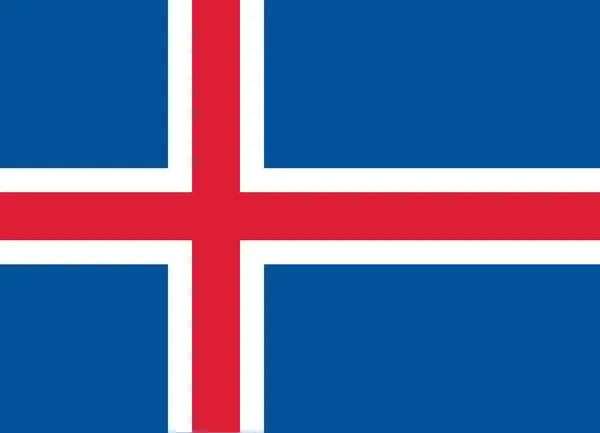
Iceland is a Nordic island country between the Arctic Ocean and the North Atlantic Ocean, located on the Mid-Atlantic Ridge between Europe and North America. It is Europe's westernmost and most sparsely populated country. Its capital and largest city is Reykjavík, which is home to about 35% of the country's roughly 395,000 residents (excluding nearby towns/suburbs, which are separate municipalities and contribute a further substantial percentage). The official language of the country is Icelandic. Iceland is on a rift between tectonic plates, and its geologic activity includes geysers and frequent volcanic eruptions. The interior consists of a volcanic plateau with sand and lava fields, mountains and glaciers, and many glacial rivers flow to the sea through the lowlands. Iceland is warmed by the Gulf Stream and has a temperate climate, despite being at a latitude just south of the Arctic Circle. Its latitude and marine influence keep summers chilly, and most of its islands have a polar climate. According to the Landnámabók, an ancient manuscript, the settlement of Iceland began in 874 AD, when the Norwegian chieftain Ingólfr Arnarson became the island's first permanent settler. In following centuries, Norwegians and to a lesser extent other Scandinavians, migrated to Iceland, bringing with them thralls (i.e., slaves or serfs) of Gaelic origin. The island was governed as an independent commonwealth under the native parliament, the Althing, one of the world's oldest functioning legislative assemblies. After a period of civil strife, Iceland acceded to Norwegian rule in the 13th century. In 1397, Iceland followed Norway's integration into the Kalmar Union along with the kingdoms of Denmark and Sweden, coming under de facto Danish rule upon its dissolution in 1523. The Danish kingdom introduced Lutheranism by force in 1550, and the Treaty of Kiel formally ceded Iceland to Denmark in 1814. Influenced by ideals of nationalism after the French Revolution, Iceland's struggle for independence took shape, culminating with the Danish–Icelandic Act of Union in 1918, and the establishment of the Kingdom of Iceland, sharing through a personal union the incumbent monarch of Denmark. During the occupation of Denmark in World War II, Iceland voted overwhelmingly to become a republic in 1944, ending its remaining formal ties to Denmark.
Also on this shelf
Caifanes.
Bianzhong.
See also
Uncatalogued shelfText from Wikipedia; plate via Wikimedia Commons. Text CC BY-SA 4.0; plate freely licensed (see Commons). Source record. Images and catalogue data are reproduced from open-access collections.