Musical Instruments
Brazilian Carnival
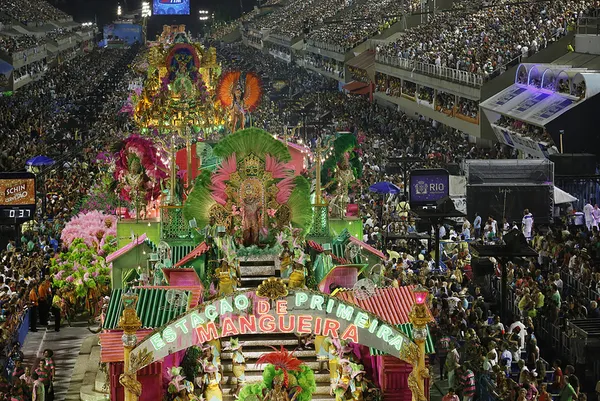
The Carnival of Brazil (Portuguese: Carnaval do Brasil, IPA: [kaʁnaˈvaw]) is an annual festival. The celebrations occur for five days before Ash Wednesday at noon, to mark the beginning of Lent, the forty-day period before Easter. During Lent, Roman Catholics and some other Christians traditionally abstain from the consumption of meat and poultry, hence the term "carnival", from carnelevare, "to remove (literally, 'raise') meat". Carnival is the most popular holiday in Brazil and has become an event of huge proportions. Except for industrial production, retail establishments such as malls, and carnival-related businesses, the country unifies completely for almost a week and festivities are intense, day and night, mainly in coastal cities. Rio de Janeiro's carnival alone drew 6 million people in 2018, with 1.5 million being travelers from inside and outside Brazil. Rio's carnival is the largest single carnival parade in the world according to Guinness World Records. Meanwhile, the carnival of São Paulo is the largest street carnival celebration by number of participants. Historically its origins can be traced to the Portuguese Age of Discoveries when their caravels passed regularly through Madeira island, a territory which already celebrated emphatically its carnival season, and where they were loaded with goods but also people and their ludic and cultural expressions.
Also on this shelf
Collegium Musicum.
Drum major (marching band).
See also
Uncatalogued shelfText from Wikipedia; plate via Wikimedia Commons. Text CC BY-SA 4.0; plate freely licensed (see Commons). Source record. Images and catalogue data are reproduced from open-access collections.