Musical Instruments
Church music in Scotland
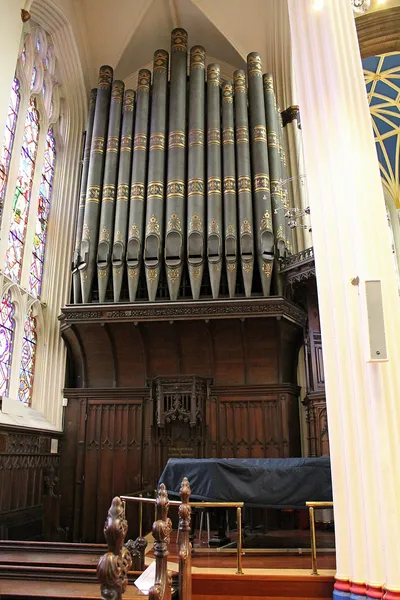
Church music in Scotland includes all musical composition and performance of music in the context of Christian worship in Scotland, from the beginnings of Christianisation in the fifth century, to the present day. The sources for Scottish Medieval music are extremely limited due to factors including a turbulent political history, the destructive practices of the Scottish Reformation, the climate and the relatively late arrival of music printing. In the early Middle Ages, ecclesiastical music was dominated by monophonic plainchant, which led to the development of a distinct form of liturgical Celtic chant. It was superseded from the eleventh century by more complex Gregorian chant. In the High Middle Ages, the need for large numbers of singing priests to fulfill the obligations of church services led to the foundation of a system of song schools, to train boys as choristers and priests. From the thirteenth century, Scottish church music was increasingly influenced by continental developments. Monophony was replaced from the fourteenth century by the Ars Nova consisting of complex polyphony. Survivals of works from the first half of the sixteenth century indicate the quality and scope of music that was undertaken at the end of the Medieval period. The outstanding Scottish composer of the first half of the sixteenth century was Robert Carver, who produced complex polyphonic music. The Reformation had a severe impact on church music. The song schools of the abbeys, cathedrals and collegiate churches were closed down, choirs disbanded, music books and manuscripts destroyed and organs removed from churches. The Lutheranism that influenced the early Scottish Reformation attempted to accommodate Catholic musical traditions into worship. Later the Calvinism that came to dominate was much more hostile to Catholic musical tradition and popular music, placing an emphasis on what was biblical, which meant the Psalms and most church compositions were confined to homophonic settings. James VI attempted to revive the song schools, however, the triumph of the Presbyterians in the National Covenant of 1638 led to and end of polyphony.
Also on this shelf
Duffmuttu.
Coleman Hawkins.
See also
Uncatalogued shelfText from Wikipedia; plate via Wikimedia Commons. Text CC BY-SA 4.0; plate freely licensed (see Commons). Source record. Images and catalogue data are reproduced from open-access collections.