Musical Instruments
Cezar Bolliac
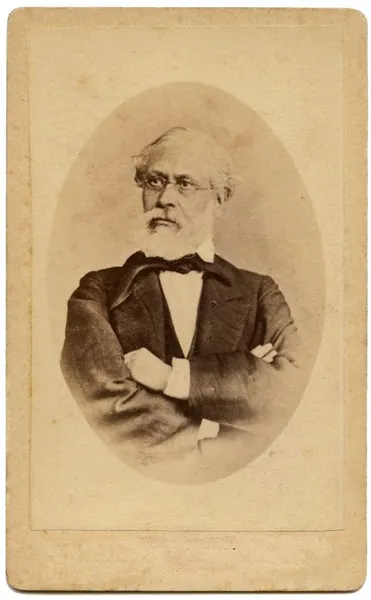
Cezar or Cesar Bolliac, also known as Boliac, Boliacu, Boliak and Boleac (transitional Cyrillic: ЧeсарȢ БoliaкȢ; 23 or 25 March 1813 – 25 February 1881), was a Wallachian and Romanian writer, scholar, and political figure. Although born to non-Romanian parents, he joined the local aristocracy, or boyardom, through adoption into the Pereț family. He was briefly a cadet in the Wallachian military forces, but harbored resentment toward the Russian Empire, which had brought Wallachia into its sphere of influence. Abandoning a military career, he took up writing and publishing and, for a time, edited a literary magazine called Curiosul, which bridged neoclassicism and romanticism. Like other Romanian liberals and Freemasons, Bolliac opposed the Russian constitutional arrangement known as the Regulamentul Organic, viewing it as a remnant of feudalism. He was therefore implicated in the anti-Russian conspiracy of 1840 and was detained on orders from Prince Alexandru II Ghica. He was ultimately released through the intervention of other members of the Ghica family, who remained his friends and protectors. Upon his return, Bolliac continued to challenge censorship, inventing a style of social poetry that favored the exploited peasantry and expressed sympathy for the Romani underclass, which was enslaved by the boyars. He moved away from liberalism toward utopian socialism and then, briefly, toward a variant of communism; he combined these views with Romanian nationalism, shifting it from romantic to left-wing variants. Reaching out to fellow Romanian nationalists in Moldavia and throughout the Austrian Empire, he became involved in researching the origins of the Romanians, performing his first archeological digs along the Danube and in the Southern Carpathians. The landscape also provided him with inspiration for romantic elegies, which endure as some of his best works as a poet. Bolliac became an increasingly sarcastic critic of Westernization, earning praise for his journalistic wit, and a rediscoverer of Romanian folklore. He became convinced that the Romanians were primarily descendants of the Dacians, a romantic and post-romantic ideology later taken up by Bogdan Petriceicu Hasdeu and transformed into Dacianism. Under Prince Gheorghe Bibescu, who embraced nationalism, Bolliac served as a poet laureate and a public prosecutor.
Also on this shelf
Culture of Hunan.
Bud Scott.
See also
Uncatalogued shelfText from Wikipedia; plate via Wikimedia Commons. Text CC BY-SA 4.0; plate freely licensed (see Commons). Source record. Images and catalogue data are reproduced from open-access collections.