Medieval and Manuscripts
Cultural depictions of Frederick II, Holy Roman Emperor
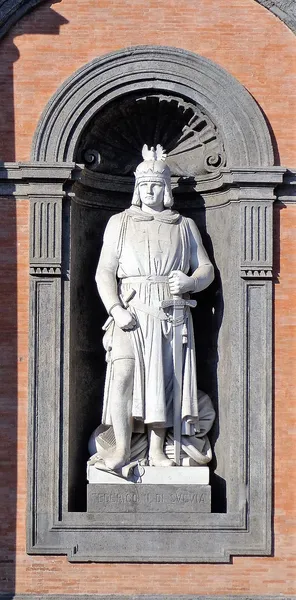
Frederick II, Holy Roman Emperor, also called Stupor mundi (Wonder of the World), was a notable European ruler who left a controversial political and cultural legacy. Considered by some to be "the most brilliant of medieval German monarchs, and probably of all medieval rulers", and admired for his multifaceted activities in the fields of government building, legislative work, cultural patronage and science, he has also been criticized for his cruelty and despotism. In Italy, the emperor gained a split image, with one element being favoured over the other depending on the era and the region: tyrant, heretic, enlightened despot, Puer Apulia (Boy from Apulia), and father of the Fatherland. Modern scholars generally praise the emperor's many talents, but the degree Frederick's actions and attitude can be considered to be a break from contemporary norms, as well as his contribution to contemporary advancement of knowledge (in the context of Sicilian and Hohenstaufen legacies, as well as cultural developments by other courts) is often subject to debates.
Also on this shelf
Gateacre.
Afterlife.
See also
Uncatalogued shelfText from Wikipedia; plate via Wikimedia Commons. Text CC BY-SA 4.0; plate freely licensed (see Commons). Source record. Images and catalogue data are reproduced from open-access collections.