Medieval and Manuscripts
Algiers
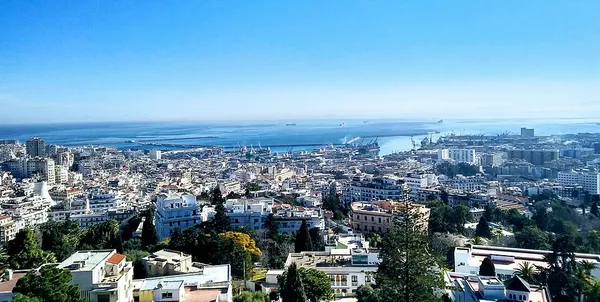
Algiers ( al-JEERZ; Arabic: الجزائر, romanized: al-Jazāʾir, pronounced [al.d͡ʒazaːʔir] , locally [(ɪ)ˈd͡ːzaːjir]; French: Alger, pronounced [alʒe] ; Algerian Tamazight: ⴷⵣⴰⵢⵔ, romanized: Dzayer), officially Capital City of Algiers (Arabic: الجزائر العاصمة, romanized: al-Jazāʾir al-ʿĀṣima; Algerian Tamazight: ⴷⵣⴰⵢⵔ ⵜⴰⵎⴰⵏⴰⵖⵜ, romanized: Dzayer Tamaneɣt), is the capital and largest city of Algeria, located on the Mediterranean Sea in the north-central portion of the country. In 2025, an estimated 4.325 million people resided within the urban area. Algiers is the third-largest city on the Mediterranean, the tenth-largest city in the Arab world, and the 19th-largest city in Africa by population. Algiers is the capital of the Algiers Province; it extends over many communes without having its own separate governing body. It extends along the Bay of Algiers surrounded by the Mitidja Plain and major mountain ranges. Its favorable location made it the center of Ottoman and French influences for the region, shaping it to be a diverse metropolis. Algiers was formally founded in 972 AD by Buluggin ibn Ziri, though its history goes back to between 1200 and 250 BC as a Phoenician trading settlement. Over time, it came under the control of several powers, including Numidia, the Roman Empire, and various Islamic caliphates. In 1516, it became the capital of the Ottoman Regency of Algiers, a status it held until the French invasion in 1830, after which it served as the capital of French Algeria. During World War II, it briefly functioned as the administrative center of Free France from 1942 to 1944 before returning to French colonial rule. It has remained the capital of the modern Algerian state since the Algerian Revolution in 1962. Algiers is the main tourist destination in Algeria, known for its numerous museums, art galleries, and cultural institutions. Most notable is the historic Casbah, a UNESCO World Heritage Site featuring traditional Algerian, Ottoman, and Andalusian architecture. The city also contains a larger French-built section that showcases diverse architectural styles and trends. Commonly referred to as al bidha ("the white") for its whitewashed buildings, Algiers blends colonial and indigenous urban influences.
Also on this shelf
Interlace (art).
Byzantine literature of the Laskaris and Palaiologos periods.
See also
Uncatalogued shelfText from Wikipedia; plate via Wikimedia Commons. Text CC BY-SA 4.0; plate freely licensed (see Commons). Source record. Images and catalogue data are reproduced from open-access collections.