Medieval and Manuscripts
Byzantine glass
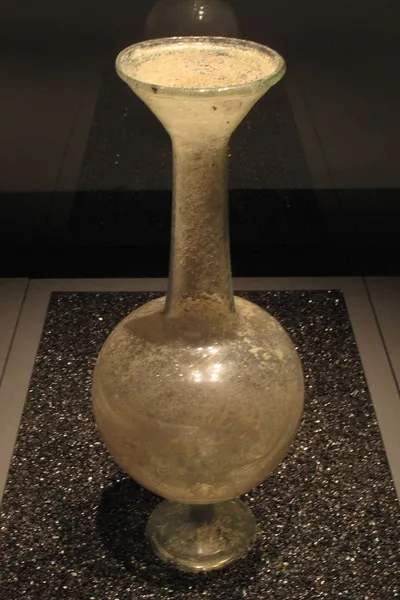
Byzantine glass objects resembled their earlier Hellenistic counterparts, during the fourth and early fifth centuries CE in both form and function. Over the course of the fifth century CE, Byzantine glass blowers, based mostly in the area of Syria and Palestine, developed a distinct Byzantine style. While glass vessels continued to serve as the primary vehicles for pouring and drinking liquid, glassware for lighting, currency and commodity weights, window panes, and glass tesserae for mosaics and enamels also surged in popularity. Following the Arab conquests of the seventh century CE, large quantities of glass were imported from the Levant, which continued to produce raw and manufactured glass. Scholars once believed that glassware was an expensive luxury good reserved for the upper strata of society, however, recent archaeological excavations have unearthed a considerable quantity of unadorned glassware intended for lower-class residents.
Also on this shelf
Abbey of Saint-Germain d'Auxerre.
Anne Neville.
See also
Uncatalogued shelfText from Wikipedia; plate via Wikimedia Commons. Text CC BY-SA 4.0; plate freely licensed (see Commons). Source record. Images and catalogue data are reproduced from open-access collections.