Medieval and Manuscripts
Aniconism in Christianity
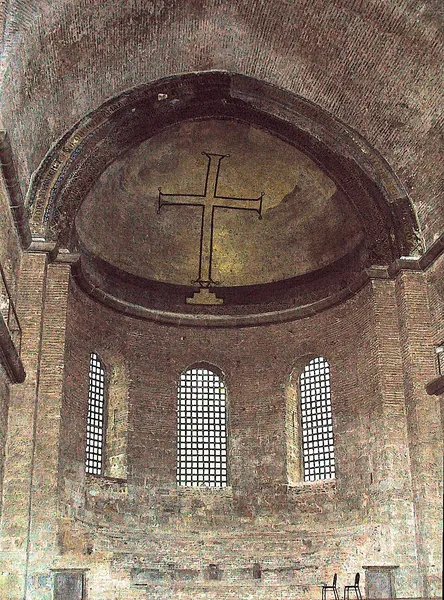
Aniconism is the absence of material representations of the natural world and the supernatural in various cultures. Most denominations of Christianity have not generally practiced aniconism, or the avoidance or prohibition of these types of images, even dating back to early Christian art and architecture. Those in the faith have generally had an active tradition of making artwork and Christian media; depicting God, Jesus, The Holy Spirit, religious figures including saints and prophets, and other aspects of theology like The Trinity and Manus Dei. Periods of aniconism have characterized various points of Christian history; early Christianity was largely aniconic, with Church Fathers Tertullian and Clement of Alexandria regarding the Ten Commandments to be binding on Christians. Early Christian apologists argued that God was beyond representation "and insisted that material things, unlike divine beings, were subject to disintegration, rust and decay." Marcus Minucius Felix stated that Christians lacked images "because Christians believe in and worship an invisible God." Aniconism was notable during the controversy of the Byzantine iconoclasm of the eighth century, and following the Protestant Reformation of the 16th century, when Calvinism in particular rejected all images in churches, and this practice continues today in conservative Reformed (Calvinist) churches, as well as in Anabaptist Christianity. The Catholic Church has always defended the use of sacred images in churches, shrines, and homes, encouraging their veneration but condemning anyone who would worship them as if they were divine themselves. The use of religious icons and images continues to be advocated at the highest level by religious leaders of major Christian denominations such as some Lutherans, Anglo-Catholics and Roman Catholics. The veneration of icons is also a key element of the doxology of the Eastern Orthodox Church. The Catholic Church and Eastern Orthodox Church accept the church council which condemned iconoclasm and mandated the use of sacred images, the icons of saints, and the crucifix in churches, public shrines, and in homes. The explanation of the consistency of sacred images with the Christian religion was largely based on the arguments of St. John Damascene. Modern Anglicanism contains both schools of thought – aniconism and iconodulism.
Also on this shelf
Cathedral of the Most Blessed Sacrament.
Christchurch Arts Centre.
See also
Uncatalogued shelfText from Wikipedia; plate via Wikimedia Commons. Text CC BY-SA 4.0; plate freely licensed (see Commons). Source record. Images and catalogue data are reproduced from open-access collections.