Medieval and Manuscripts
Bulgarian–Hungarian wars
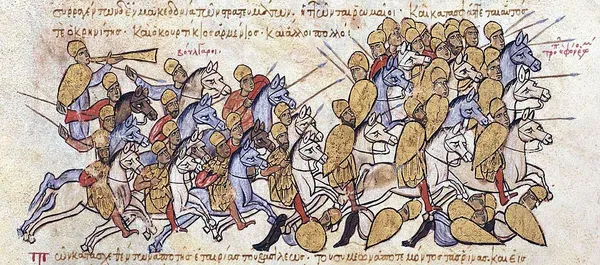
The Bulgarian–Hungarian wars (Bulgarian: Българо-Унгарски Войни, romanized: Bŭlgaro-Ungarski Voĭni; Hungarian: Bolgár-magyar háborúk) were a series of conflicts that occurred during the 9th–14th centuries between the First and Second Bulgarian Empires and the Magyar tribes, the Principality of Hungary and later the Kingdom of Hungary. Clashes first occurred in the late 9th century when the Byzantine Empire recruited Hungarians to attack the First Bulgarian Empire. Simeon I of Bulgaria retaliated by inciting the Pechenegs to attack the Hungarians from the east. During this time, central, eastern and southeastern parts of the post-Avar Carpathian basin were under the control or influence of the First Bulgarian Empire. During the 10th century, the Hungarians overran the Bulgarian dukes in what is now Transylvania as they conquered the Carpathian Basin. Conflicts continued until the middle of the century when peace was restored. Both countries sustained friendly relations until 1003 when another war broke out, further diminishing Bulgarian power in the region. In 1185, after the re-establishment of the Bulgarian Empire, both states fought numerous conflicts for control over the provinces of Belgrade, Braničevo, Vidin and Severin.
Also on this shelf
Church of the Nativity of the Blessed Virgin Mary, Singapore.
Delle Piane family.
See also
- ▸Inverness Cathedral
- ▸Cathedral of Saint Vincent de Paul
- ▸Church of Saint Mark (Saint Paul, Minnesota)
Text from Wikipedia; plate via Wikimedia Commons. Text CC BY-SA 4.0; plate freely licensed (see Commons). Source record. Images and catalogue data are reproduced from open-access collections.