Medieval and Manuscripts
Bar Kokhba Revolt
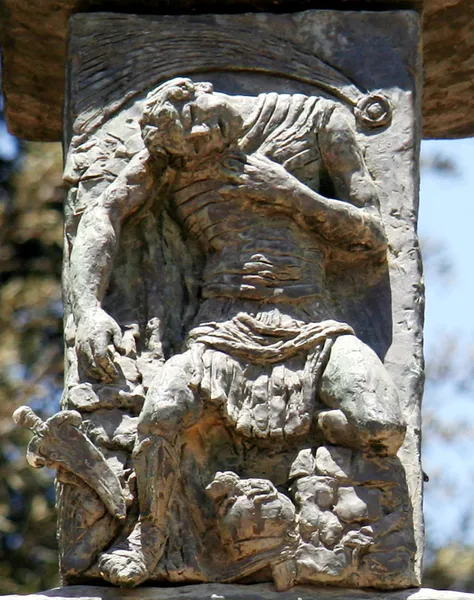
The Bar Kokhba Revolt (132–136 AD), also known as the Bar Kokhba War, the War of Betar, and the Third (or Second) Jewish–Roman War, was the last and most devastating of three major Jewish rebellions against the Roman Empire. Led by Simon bar Kokhba, the rebels established an independent Jewish state that lasted over three years before being crushed by the Romans, leading to the near-total depopulation of Judea proper, along with mass killings, enslavement, and displacement. Resentment toward Roman rule and national aspirations remained high in the Roman province of Judaea following the First Jewish Revolt. Around 130 AD, Emperor Hadrian planned to rebuild Jerusalem as Aelia Capitolina, a Roman colonia dedicated to Jupiter, extinguishing hopes for the restoration of the Temple in Jerusalem. This may have been accompanied by a ban on circumcision, though scholars differ on whether it preceded the mutiny or followed as punishment. These measures prompted preparations for a guerrilla campaign, including the construction of underground complexes within villages. Simon bar Kokhba was declared nasi ('prince') of Israel, and his administration issued standardized weights and its own coinage. After an initial attempt to suppress the revolt by the provincial governor, Quintus Tineius Rufus, failed, Hadrian dispatched one of Rome's most capable generals, Sextus Julius Severus, supported by an unusually large concentration of forces drawn from across the empire. Following Severus's arrival in 133, the Romans systematically devastated towns and villages throughout the country. In 135, the stronghold of Betar fell and the Romans killed Simon bar Kokhba. Many rebels and refugees took shelter in natural caves in the Judaean Desert, but Roman troops besieged these hideouts, starving, killing, or capturing those inside. The consequences of the revolt were disastrous for Judea's Jewish population. Ancient and contemporary sources estimate that hundreds of thousands were killed, with many others enslaved and displaced. The Romans imposed harsh religious prohibitions, including bans on circumcision, Torah study and Sabbath observance, though these were largely lifted after Hadrian's death.
Also on this shelf
Church of the Transfiguration, Episcopal (Manhattan).
Byzantine Papacy.
See also
Uncatalogued shelfText from Wikipedia; plate via Wikimedia Commons. Text CC BY-SA 4.0; plate freely licensed (see Commons). Source record. Images and catalogue data are reproduced from open-access collections.