Medieval and Manuscripts
Early Middle Ages
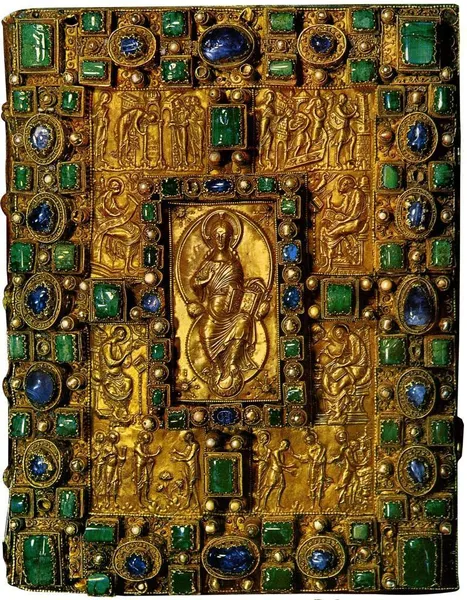
The Early Middle Ages (or early medieval period), sometimes controversially referred to as the Dark Ages, is typically regarded by historians as lasting from the late 5th to the 10th century. They marked the start of the Middle Ages of European history, following the decline of the Western Roman Empire, and preceding the High Middle Ages (c. 11th to 14th centuries). The alternative term late antiquity, for the early part of the period, emphasizes elements of continuity with the Roman Empire, while Early Middle Ages is used to emphasize developments characteristic of the earlier medieval period. The period saw a continuation of trends evident since late classical antiquity, including population decline, especially in urban centres, a decline of trade and increased migration. In the 19th century the Early Middle Ages were often labelled the Dark Ages, a characterization based on the relative scarcity of literary and cultural output from this time. The term is rarely used by academics today. The Eastern Roman Empire, or Byzantine Empire, survived, though in the 7th century the Rashidun Caliphate and the Umayyad Caliphate conquered the southern part of the Roman territory. Many of the listed trends reversed later in the period. In 800, the title of Emperor was revived in Western Europe with Charlemagne, whose Carolingian Empire greatly affected later European social structure, arts, culture, and history. Europe experienced a return to systematic agriculture in the form of the feudal system, which adopted such innovations as three-field planting and the heavy plough. Barbarian migration stabilized in much of Europe, although the Viking expansion greatly affected Northern Europe.
Also on this shelf
Canon (canon law).
History of Beirut.
See also
Uncatalogued shelfText from Wikipedia; plate via Wikimedia Commons. Text CC BY-SA 4.0; plate freely licensed (see Commons). Source record. Images and catalogue data are reproduced from open-access collections.