Medieval and Manuscripts
Chertsey Abbey
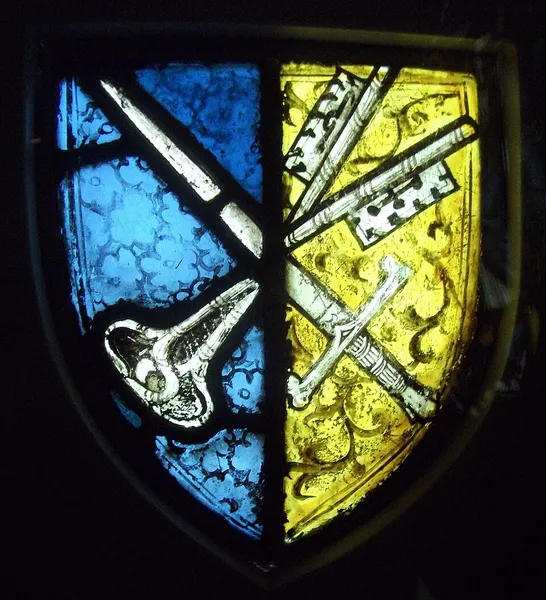
Chertsey Abbey, dedicated to St Peter, was a Benedictine monastery located at Chertsey in the English county of Surrey. It was founded in 666 AD by Saint Erkenwald who was the first abbot, and from 675 AD the Bishop of London. At the same time he founded the abbey at Chertsey, Erkenwald founded Barking Abbey on the Thames east of London, where his sister Saint Ethelburga was the first abbess. In the 9th century it was sacked by the Danes. In 870, when it was attacked, many monks were killed. The abbot then was Beocca and those slain were known as Saint Beocca, Saint Ethor, and the Martyrs of Chertsey. Their deaths were recorded by William of Malmesbury. The monastery was refounded from Abingdon Abbey by King Edgar of England in 964. In the eleventh century the monks engineered the Abbey River as an offshoot of the River Thames to supply power to the abbey's watermill. In the Late Middle Ages, the Abbey became famous as the burial place of King Henry VI (whose body was later transferred to St George's Chapel, Windsor). The abbey was dissolved by the commissioners of King Henry VIII in 1537, but the community moved to Bisham Abbey in Berkshire.
Also on this shelf
List of new churches by G. E. Street.
Basilica of St. Stephen (New Orleans).
See also
Uncatalogued shelfText from Wikipedia; plate via Wikimedia Commons. Text CC BY-SA 4.0; plate freely licensed (see Commons). Source record. Images and catalogue data are reproduced from open-access collections.