Medieval and Manuscripts
Female education
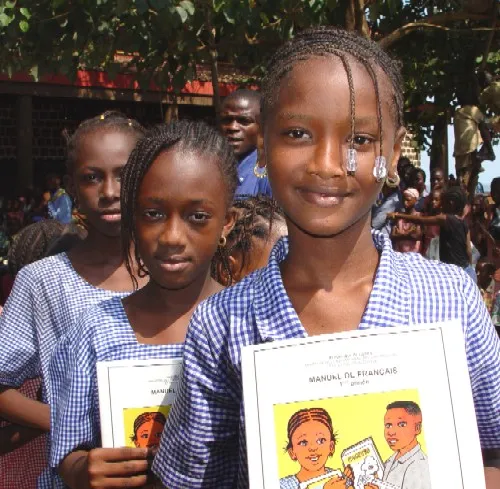
Female education is a catch-all term for a complex set of issues and debates surrounding education (primary education, secondary education, tertiary education, and health education in particular) for girls and women. It is frequently called girls' education or women's education. It includes areas of gender equality and access to education. The education of women and girls is important for the alleviation of poverty. Broader related topics include single-sex education and religious education for women, in which education is divided along gender lines. Inequalities in education for girls and women are complex: women and girls face explicit barriers to entry to school, for example, violence against women or prohibitions of girls from going to school, while other problems are more systematic and less explicit. For example, science, technology, engineering and mathematics (STEM) education disparities are deep rooted, even in Europe and North America. In some Western countries, women have surpassed men at many levels of education. For example, in the United States in 2020/2021, women earned 63% of associate degrees, 58% of bachelor's degrees, 62% of master's degrees, and 56% of doctorates. Additionally, women's education has been shown to improve communication skills and increase rates of civic participation. Improving girls' educational levels has been demonstrated to have clear impacts on the health and economic future of young women, which in turn improves the prospects of their entire community. The infant mortality rate of babies whose mothers have received primary education is half that of children whose mothers are illiterate. In the poorest countries of the world, 50% of girls do not attend secondary school. Yet, research shows that every extra year of school for girls increases their lifetime income by 15%. Improving female education, and thus the earning potential of women, improves the standard of living for their own children, as women invest more of their income in their families than men do. Yet, many barriers to education for girls remain. In some African countries, such as Burkina Faso, girls are unlikely to attend school for such basic reasons as a lack of private latrine facilities for girls. Education results in improved health and health awareness for women and their families.
Also on this shelf
Congregation Mickve Israel.
Euro gold and silver commemorative coins (Austria).
See also
Uncatalogued shelfText from Wikipedia; plate via Wikimedia Commons. Text CC BY-SA 4.0; plate freely licensed (see Commons). Source record. Images and catalogue data are reproduced from open-access collections.