Medieval and Manuscripts
Dionisie Eclesiarhul
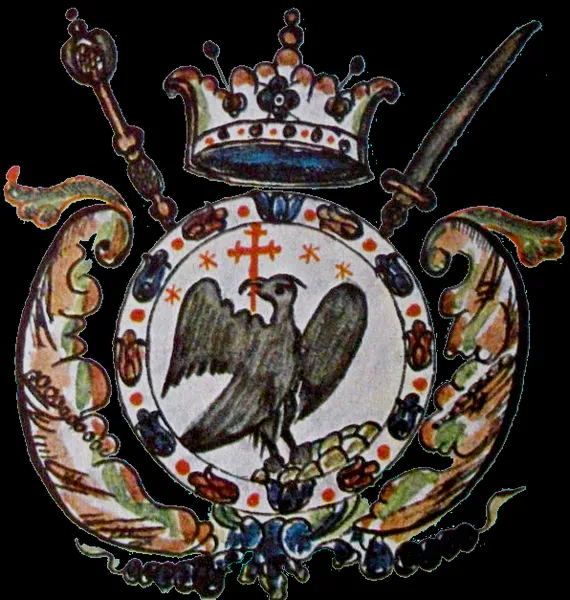
Dionisie Eclesiarhul, also spelled Ecleziarhul, Eclisiarchul, or Eclesiarcul ("the Ecclesiarch", born Dumitru or Dimitrie, also credited as Dionisie din Pietrari and Dionisie Cozăianul; c. 1740 – 1820), was a Wallachian monk, chronicler, and polemicist, also noted as a miniaturist and calligrapher. His life coincided with the Phanariote reigns, when a series of Wallachian Princes, generally Greeks, enforced Hellenization; Dionisie secretly resented this process, and rallied with a Wallachian conservative patriotism that bordered on Romanian nationalism. Wallachia was also a tributary state of the Ottoman Empire, which Dionisie viewed as a detestable overlord. A devout Eastern Orthodox (though he questioned the Ecumenical Patriarchate on political grounds), he spent his life in service to the Metropolis of Wallachia, which is now a component of the Romanian Orthodox Church. Lastly, he displayed a regional allegiance to Oltenia, which was then administered as a Great Banship under Wallachian supervision, and where he spent almost all his life. After a short career as a married priest, Dionisie became a prolific scribe, finishing he Dobrușa beadroll in 1777. He was treasured by the Râmnic Archdiocese, where he served administrative functions while also becoming a highly skilled calligrapher in several languages. His historical writing is unusual for its context in that it relies heavily on first-hand experiences—one of the first such events is the Austro-Turkish War of 1788, during which Dionisie and his fellow monks were held as hostages in Craiova. The war also gave him what may have been his only experience of life outside Wallachia, namely an extended tour of Habsburg Hungary. Marginalized upon his return, he withdrew into regular monastic life, witnessing Oltenia's ruin, brought on by warlord Osman Pazvantoğlu—whom he depicted as a half-legendary figure—and the economic constraints introduced by the Napoleonic Wars. In his later chronicle, he depicts Napoleon as a negative figure, recording some of the rumors which circulated in respect to him; he also published translations of works dealing with Napoleon's eventual defeat. After a brief return to favor and settlement in Bucharest, the Ecclesiarch was again expelled to Craiova, where he apparently spent the rest of his life, in 1814.
Also on this shelf
List of new churches by G. E. Street.
List of places of worship in Horsham District.
See also
Uncatalogued shelfText from Wikipedia; plate via Wikimedia Commons. Text CC BY-SA 4.0; plate freely licensed (see Commons). Source record. Images and catalogue data are reproduced from open-access collections.