Medieval and Manuscripts
Armenians
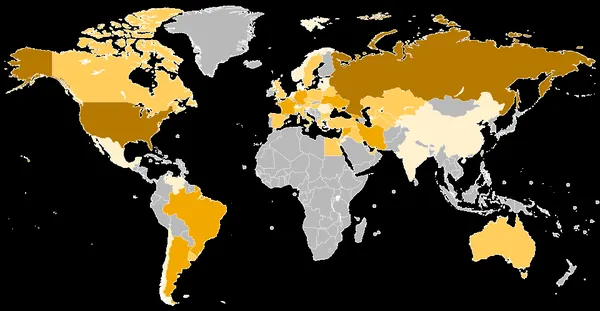
Armenians (Armenian: հայեր, romanized: hayer, [hɑˈjɛɾ]) are an ethnic group indigenous to the Armenian highlands of West Asia. Armenians constitute the main demographic group in Armenia and constituted the main population of the breakaway Republic of Artsakh until their subsequent deportation after the 2023 Azerbaijani offensive. There is a large diaspora of around five million people of Armenian ancestry living outside the Republic of Armenia. The largest Armenian populations exist in Russia, the United States, France, Georgia, Iran, Germany, Ukraine, Lebanon, Brazil, Argentina, Syria, and Turkey. The present-day Armenian diaspora was formed mainly as a result of the Armenian genocide with the exceptions of Iran, former Soviet states, and parts of the Levant. Armenian is an Indo-European language. It has two mutually intelligible spoken and written forms: Eastern Armenian, today spoken mainly in Armenia, Artsakh, Iran, and the former Soviet republics; and Western Armenian, used in the historical Western Armenia and, after the Armenian genocide, primarily in the Armenian diasporan communities. The unique Armenian alphabet was invented in 405 AD by Mesrop Mashtots. Most Armenians adhere to the Armenian Apostolic Church, a non-Chalcedonian Christian church, which is also the world's oldest national church. Christianity began to spread in Armenia soon after Jesus' death, due to the efforts of two of his apostles, St. Thaddeus and St. Bartholomew. In the early 4th century, the Kingdom of Armenia became the first state to adopt Christianity as a state religion, followed by the first pilgrimages to the Holy Land where a community established the Armenian Quarter of Old Jerusalem.
Also on this shelf
Hastilude.
Holy Cross Church (Neuenwalde Convent).
See also
Uncatalogued shelfText from Wikipedia; plate via Wikimedia Commons. Text CC BY-SA 4.0; plate freely licensed (see Commons). Source record. Images and catalogue data are reproduced from open-access collections.