Medieval and Manuscripts
Antiphonary of St. Benigne
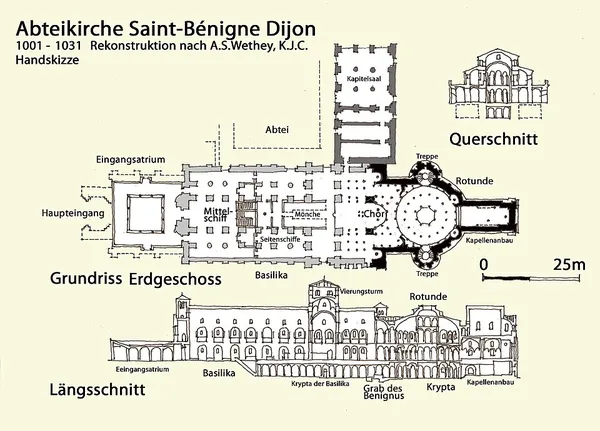
The Antiphonary tonary missal of St. Benigne (also called Antiphonarium Codex Montpellier or Tonary of Saint-Bénigne of Dijon) was written in the last years of the 10th century, when the Abbot William of Volpiano at St. Benignus of Dijon reformed the liturgy of several monasteries in Burgundy. The chant manuscript records mainly Western plainchant of the Roman-Frankish proper Mass and part of the chant sung during the matins ("Gregorian chant"), but unlike the common form of the Gradual and of the Antiphonary, William organized his manuscript according to the chant genre (antiphons with psalmody, alleluia verses, graduals, offertories, and proses for the missal part), and these sections were subdivided into four or eight parts according to the octoechos—in case it was divided in four parts additional letters like A and Pl at the margin indicated within the protus, deuterus, tritus and tetrardus section, whether they were classified as "autentus" or "plagalis". This disposition followed the order of a tonary, but the scribe wrote not only the incipits of the classified chant, he wrote the complete chant text with the music in central French neumes which were still written in campo aperto, and added a second alphabetic notation of William's invention for the melodic structure of the codified chant.
Also on this shelf
Holy Trinity Church, East Ferry.
St Michael and All Angels Church, Kingaroy.
See also
Uncatalogued shelfText from Wikipedia; plate via Wikimedia Commons. Text CC BY-SA 4.0; plate freely licensed (see Commons). Source record. Images and catalogue data are reproduced from open-access collections.