Medieval and Manuscripts
Horse racing colours in Great Britain
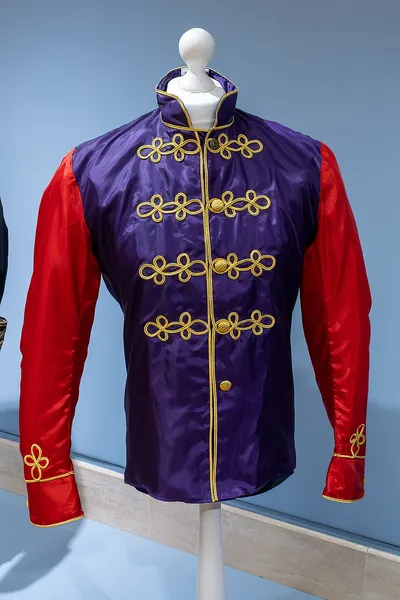
Racing colours in British horse racing consist of a silk coat and cap of unique colour combination worn by jockeys during horse races which serve as a quasi-heraldic symbol identifying the horse's owner. The colours serve, as heraldry in its earliest form on the battlefield, as a "recognition device" to enable spectators to identify and differentiate racing horses at a distance. The display of racing colours in England is strictly regulated by the British Horseracing Authority (BHA) (formerly by the Jockey Club) by whom all colours must be approved and officially registered. Since regulations made in 1970, permissible designs are limited in scope, style and to 18 standard colours (before 2017), and also take account of international agreements between various international controlling bodies of horse racing, counterparts to the BHA, for example the French France Galop (formerly the Société d’Encouragement des Races des Chevaux, founded in 1833). However old colours registered before 1970 are exempt from the restrictive design regulations, including for example the royal colours incorporating gold braid, which date back to Edward VII. The term "silks" is used in the United States to refer to racing colours. Racing colours comprise three elements: jacket, sleeves and cap, the colours of which being stated in that order (as a blazon for a coat of arms) define the "racing colours".
Also on this shelf
St Chad's Church, Farndon.
Chapel of the Holy Sepulchre.
See also
Uncatalogued shelfText from Wikipedia; plate via Wikimedia Commons. Text CC BY-SA 4.0; plate freely licensed (see Commons). Source record. Images and catalogue data are reproduced from open-access collections.