Medieval and Manuscripts
History of Christianity
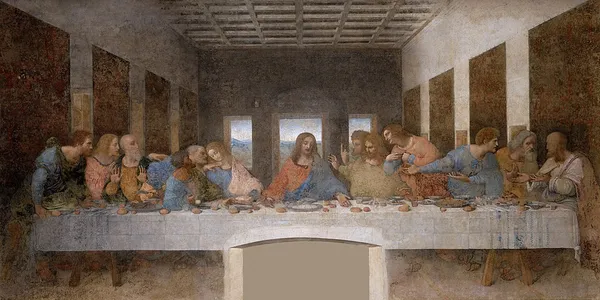
The history of Christianity begins with Jesus, an itinerant Jewish preacher and teacher, who was crucified in Jerusalem c. AD 30–33. His followers proclaimed that he was the incarnation of God and had risen from the dead. In the two millennia since, Christianity has spread across the world, becoming the world's largest religion with over two billion adherents worldwide. Christianity was a mostly urban grassroots movement that grew to over a million adherents by the third century. In its first century, it began developing a church government and a religious text, which was not formalized as canon until the fourth century. Constantine the Great issued the Edict of Milan legalizing it in 313. Christian art, architecture, and literature blossomed during the fourth century, but competing theological doctrines led to divisions. The Nicene Creed of 325, the Nestorian schism, the Church of the East and Oriental Orthodoxy resulted. After the fall of Rome in 476, the West was divided. Monks preserved culture and provided social services. Early Muslim conquests devastated many Christian communities in the Middle East and North Africa causing decline. The church in the East prospered in Asia and helped form the states of Eastern Europe. The 1054 East–West Schism marked the separation of Eastern Orthodoxy and the Catholic Church. In spite of many differences, the East requested western military aid against the Turks, resulting in the Crusades. Gregorian reform led to a more centralized and bureaucratic Catholicism. Faced with internal and external challenges, the church fought heresy and established courts of inquisition. Artistic and intellectual advances among western monks played a part in the Renaissance of the 12th century and the later Scientific Revolution. In the 14th century, the Western Schism and several European crises led to the 16th-century Reformation when Protestantism formed. Reformation Protestants advocated for religious tolerance and the separation of church and state and impacted economics. Quarrelling royal houses took sides in the European wars of religion. Christianity spread with the colonization of the Americas, Australia, and New Zealand. Different parts of Christianity influenced the Age of Enlightenment, American and French Revolutions, the Industrial Revolution, and participated in the Atlantic slave trade and its abolition.
Also on this shelf
Church of St Lawrence, Alton.
Dering Roll.
See also
Uncatalogued shelfText from Wikipedia; plate via Wikimedia Commons. Text CC BY-SA 4.0; plate freely licensed (see Commons). Source record. Images and catalogue data are reproduced from open-access collections.