Medieval and Manuscripts
Christianity in the 1st century
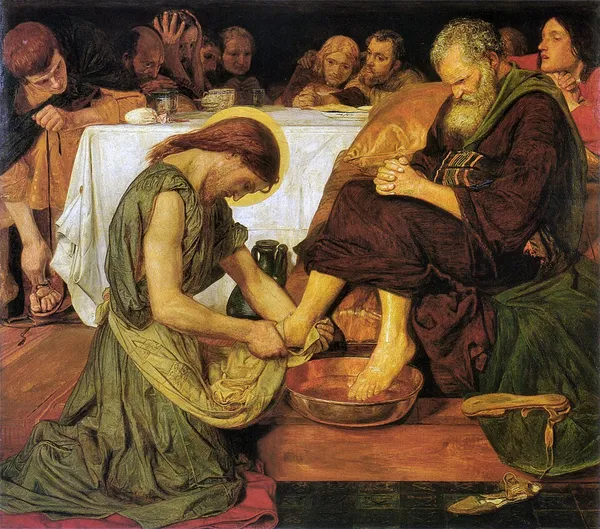
Christianity in the 1st century covers the formative history of Christianity from the start of the ministry of Jesus (c. 27–29 AD) to the death of the last of the Twelve Apostles (c. 100) and is thus also known as the "Apostolic Age." Early Christianity developed out of the ministry of Jesus. Subsequent to Jesus' death, his earliest followers formed an apocalyptic messianic Jewish sect during the late Second Temple period of the 1st century. Paul the Apostle, a Pharisee who had persecuted the early Christians of Judea, converted c. 33–36 and began to proselytize among the Gentiles. According to Paul, Gentile converts were exempted from Jewish commandments; he argued that all are justified by their faith in Jesus. This was part of a gradual split between early Christianity and Judaism, and Christianity became a distinct religion that included predominantly Gentile adherence. Jerusalem had an early Christian community led by James the Just, Peter, and John. According to Acts 11:26, it was in Antioch that the followers were first called Christians. Peter was later martyred in Rome, the capital of the Roman Empire. The apostles went on to spread the message of the Gospel around the classical world and founded apostolic sees around the early centers of Christianity. The last apostle to die was John in c. 100.
Also on this shelf
Abbey of Leno.
James Powell and Sons.
See also
Uncatalogued shelfText from Wikipedia; plate via Wikimedia Commons. Text CC BY-SA 4.0; plate freely licensed (see Commons). Source record. Images and catalogue data are reproduced from open-access collections.