Medieval and Manuscripts
Codex Aureus of Echternach
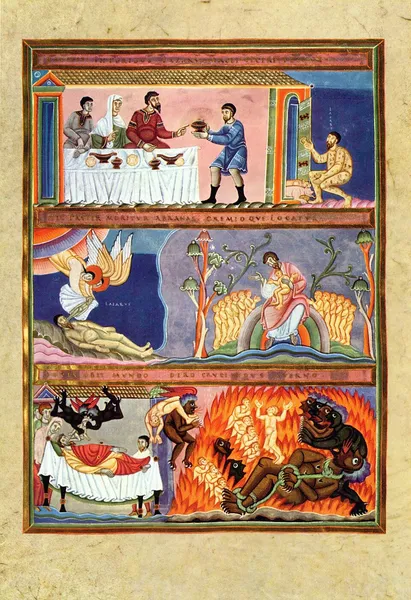
The Codex Aureus of Echternach (Codex aureus Epternacensis) is an illuminated Gospel Book, created in the approximate period 1030–1050, with a re-used front cover from around the 980s. It is now in the Germanisches Nationalmuseum in Nuremberg. The manuscript contains the Vulgate versions of the four gospels plus prefatory matter including the Eusebian canon tables, and is a major example of Ottonian illumination, though the manuscript, as opposed to the cover, probably falls just outside the end of rule by the Ottonian dynasty. It was produced at the Abbey of Echternach under the direction of Abbot Humbert. The manuscript has 136 folios which measure 446 mm by 310 mm. It is one of the most lavishly illuminated Ottonian manuscripts. It contains over 60 decorative pages including 16 full page miniatures, 9 full page initials, 5 evangelist portraits, 10 decorated pages of canon tables, and 16 half-page initials. In addition there are 503 smaller initials, and pages painted to resemble textiles. The entire text is written in gold ink.
Also on this shelf
Edmund Thomas Parris.
Droungarios of the Fleet.
See also
Uncatalogued shelfText from Wikipedia; plate via Wikimedia Commons. Text CC BY-SA 4.0; plate freely licensed (see Commons). Source record. Images and catalogue data are reproduced from open-access collections.