Medieval and Manuscripts
Coat of arms of Lithuania
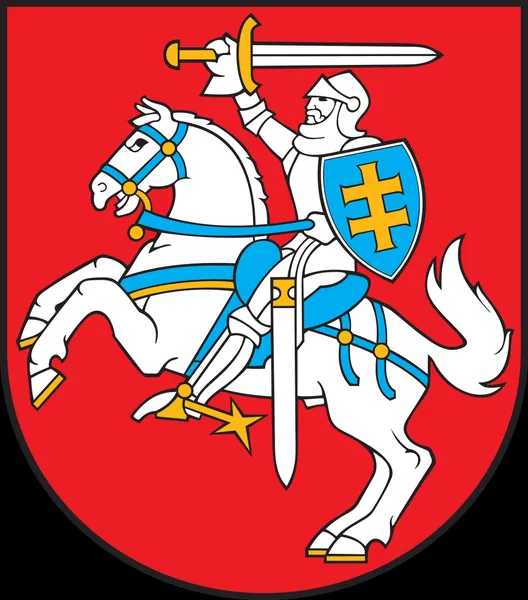
The coat of arms of Lithuania features an armoured knight on horseback, wielding a sword and carrying a shield with a Jagiellonian cross. This emblem is known in Lithuanian as Vytis (pronounced ['vîːtɪs]). Historically, the emblem has also been known as Pogoń in Polish and Пагоня (Pahonia) in Belarusian. The mounted rider first appeared on the seals of Lithuanian rulers in the late 14th century. Initially used as a personal and dynastic emblem, it became established as the coat of arms of the Grand Duchy of Lithuania during the reign of Grand Duke Vytautas the Great in the early 15th century. It remained the principal emblem of the Grand Duchy until 1795 and was displayed alongside the Polish White Eagle in the arms of the Polish–Lithuanian Commonwealth. The emblem was adopted by the restored Republic of Lithuania in 1918 and suppressed following the Soviet occupation in 1940. It was restored in 1990, and the present design, created by Arvydas Každailis, was approved on 4 September 1991. Article 15 of the Constitution of Lithuania states that "the Coat of Arms of the State shall be a white Vytis on a red field".
Also on this shelf
Essen Cathedral Treasury Hs. 1.
Belmont Abbey, Herefordshire.
See also
Uncatalogued shelfText from Wikipedia; plate via Wikimedia Commons. Text CC BY-SA 4.0; plate freely licensed (see Commons). Source record. Images and catalogue data are reproduced from open-access collections.