Medieval and Manuscripts
Elizabeth Woodville
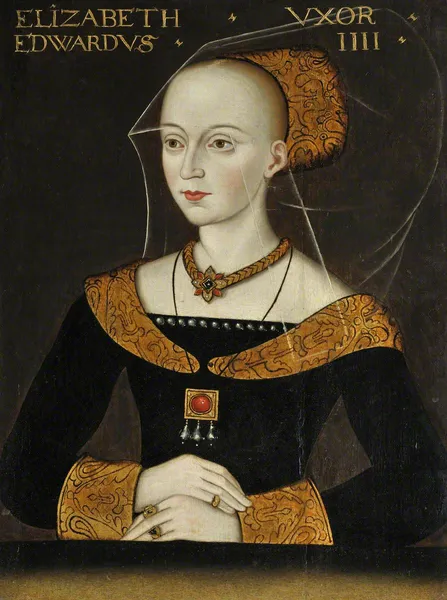
Elizabeth Woodville (also spelt Wydville, Wydeville, or Widvile; c. 1437 – 8 June 1492), known as Dame Elizabeth Grey during her first marriage, was Queen of England from 29 September 1464 until 3 October 1470 and from 11 April 1471 until 9 April 1483 as the wife of King Edward IV. She was a key figure in the Wars of the Roses, a dynastic civil war between the Lancastrian and the Yorkist factions between 1455 and 1487. At the time of her birth, Elizabeth's family was of middle rank in the English social hierarchy. Her mother, Jacquetta of Luxembourg, had previously been an aunt-by-marriage to King Henry VI, and was the daughter of Peter I, Count of Saint-Pol. Elizabeth's first marriage was to a minor supporter of the House of Lancaster, John Grey of Groby. He died at the Second Battle of St Albans in 1461, leaving Elizabeth a widowed mother of two young sons. Elizabeth's second marriage, in 1464, to Edward IV became a cause célèbre. Elizabeth was known for her beauty but came from minor nobility with no great estates, and the marriage took place in secret. Edward was the first king of England since the Norman Conquest to marry one of his subjects, and Elizabeth was the first such consort to be crowned queen. The couple had ten children together. The marriage greatly enriched Elizabeth's siblings and children, but their advancement incurred the hostility of Richard Neville, Earl of Warwick, "The Kingmaker", and his various alliances with the most senior figures in the increasingly divided royal family. This hostility turned into open discord between King Edward and Warwick, leading to a battle of wills that finally resulted in Warwick's switching allegiance to the Lancastrian cause, and to the execution of Elizabeth's father, Richard Woodville, 1st Earl Rivers, and her brother, John, by Warwick in 1469. After the death of her husband in 1483, Elizabeth remained politically influential even after her son, briefly proclaimed King Edward V, was deposed by her brother-in-law, Richard III. Edward and his younger brother Richard both disappeared soon afterwards. The Tudor court and Sir Thomas More accused Richard of their murders, although no direct evidence exists tying him to the crime.
Also on this shelf
Marcel Proust.
Auxerre.
See also
Uncatalogued shelfText from Wikipedia; plate via Wikimedia Commons. Text CC BY-SA 4.0; plate freely licensed (see Commons). Source record. Images and catalogue data are reproduced from open-access collections.