Medieval and Manuscripts
Gothic sculpture
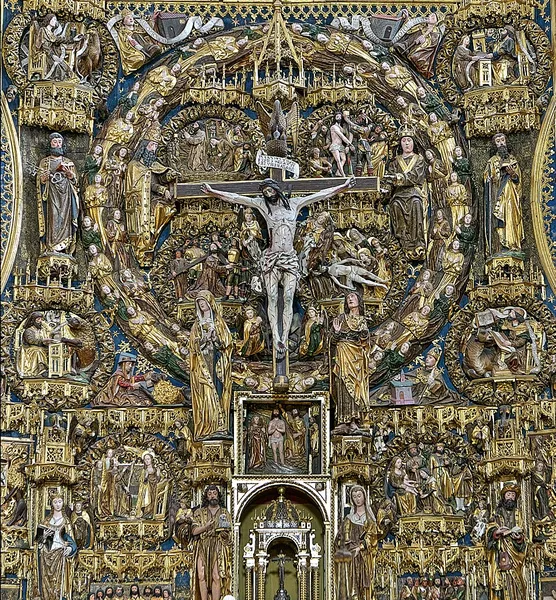
Gothic sculpture was a sculpture style that flourished in Europe during the Middle Ages, from about mid-12th century to the 16th century, evolving from Romanesque sculpture and dissolving into Renaissance sculpture and Mannerism. When the classical values started to be appreciated again in the Renaissance, the sculpture from the previous centuries was seen as shapeless and rough and was given the name of Gothic, since it was believed to come from the culture of the Goths, people considered barbaric and supposedly responsible for the disappearance of the Roman Empire. But the people from the Gothic period never gave themselves that name neither they considered themselves barbarians. On the contrary, in its emergence Gothic art was seen as innovative and was called opus modernum ("modern work"), being sculpture one of its most important and sophisticated expressions. However, the negative appreciation lasted until mid-19th century when a revivalist movement appeared, called neo-Gothic, that recovered its values. In actuality, it is known that Gothic art has nothing to do with the Goths—but the denomination remained, consecrated by the use. Gothic sculpture was born closely linked to architecture—as a result of the decoration of the great cathedrals and other religious buildings—but it eventually gained independence and started to be worked as autonomous art. It started in Paris, France, and had its first important expression in the reform of the Basilica of Saint-Denis between 1137 and 1144. Its first phase developed an austere, sleek style, with elongated proportions and a general hieratical aspect, wishing to convey an impression of spirituality, quite far from the actual anatomy of a body. From the 13th century, the style began to evolve toward greater naturalism and realism, with the progressive absorption of classical influences and a greater observation of nature. Changes in religious doctrine, which led to a rapprochement of God toward man and a softening in his previously inaccessible and inflexible character, also contributed to influencing the evolution of preferred forms and themes. By the 14th century, the Gothic style had spread far beyond the borders of France, important regional schools were formed, and by the 15th century it dominated most of Europe, then began a decline that followed different patterns in different regions.
Also on this shelf
Cross of Saint James.
Calvià.
See also
Uncatalogued shelfText from Wikipedia; plate via Wikimedia Commons. Text CC BY-SA 4.0; plate freely licensed (see Commons). Source record. Images and catalogue data are reproduced from open-access collections.