Medieval and Manuscripts
House of Laskaris
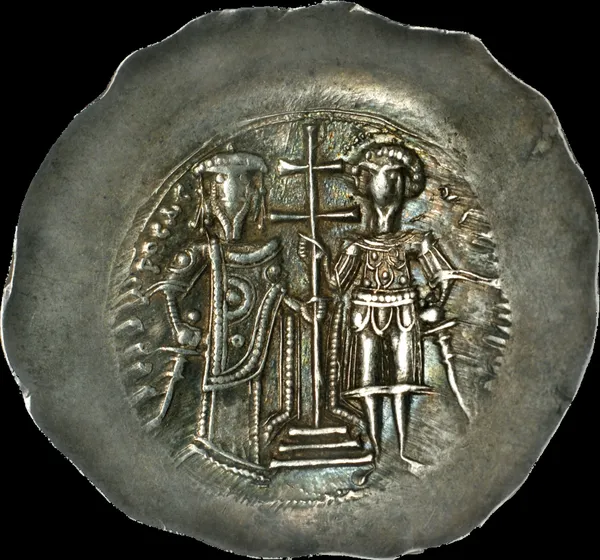
The Laskaris (Greek: Λάσκαρις (Láskaris), later Λάσκαρης; feminine form Laskarina; Greek: Λασκαρίνα), Latinized as Lascaris, was a Byzantine Greek noble family which rose to prominence during the late Byzantine period. The members of the family formed the ruling dynasty of the Empire of Nicaea, a Byzantine rump state that existed from the 1204 sack of Constantinople by the Fourth Crusade until the restoration of the Empire under the Palaeologan dynasty in 1261. Upon the sack of the Byzantine capital by the Crusaders, Alexios V Doukas was overthrown and the Latin Empire was established in most of his former lands. Byzantine nobility would flee the Latin territories and establish the three independent Greek states that rivaled the Crusaders. After a successful resistance in Asia Minor, Theodore I Laskaris founded the Empire of Nicaea and laid claims to the Byzantine throne, along with the Angelos family of Epirus and the Komnenoi of Trebizond. The Byzantine Greek population of Asia Minor sought refuge to Theodore's empire, which gradually acquired control over much of western Anatolia. The empire was further strengthened after the military victories of Theodore's successor, John III Vatatzes. John's son, Theodore II Laskaris, maintained the empire's strength until the throne was passed to his underage son, John IV Laskaris. In 1259 John fell victim to an aristocratic conspiracy which managed to establish Michael Palaiologos as his regent and co-emperor. The Nicaeans recaptured Constantinople in 1261 and Michael established the Palaiologos family as the new imperial dynasty. Under the Palaeologan rule, the Lascarids remained among the senior nobility up to the dissolution of the Byzantine Empire, whereupon many of them emigrated to Italy. Advertising their ties to the Komnenoi, early family members used the name 'Komnenos Laskaris', while two were additionally called 'Tzamantouros'.
Also on this shelf
Book of Common Prayer (1845 illuminated version).
Fourth Presbyterian Church (Chicago).
See also
Uncatalogued shelfText from Wikipedia; plate via Wikimedia Commons. Text CC BY-SA 4.0; plate freely licensed (see Commons). Source record. Images and catalogue data are reproduced from open-access collections.