Medieval and Manuscripts
Grade I listed buildings in Oxford
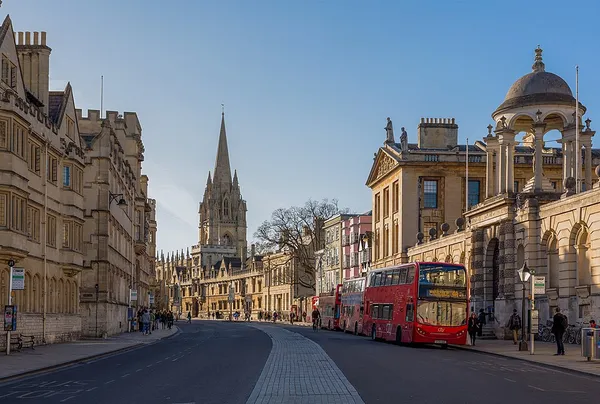
The city of Oxford, England, was founded in the 8th century at a fording point at the confluence of the River Thames and the River Cherwell. The medieval period saw the development of the University of Oxford, the oldest in the English-speaking world. Oxford was granted city status in 1542, and both it and the university continued to expand, the wealth of the university and its benefactors enabling the construction of many buildings of note, by some of the country's most prominent architects. Many of these structures now enjoy statutory protection through the listed building scheme. In the United Kingdom, the term "listed building" refers to a building or other structure officially designated as being of special architectural, historical or cultural significance. Listing was begun by a provision in the Town and Country Planning Act 1947. Once a building is listed, strict limitations are imposed on the modifications allowed to its structure or fittings. In England authority for listing lies with Historic England. Listed buildings are categorised into three grades: Grade I – buildings of exceptional interest; only 2.5%, some 9000 in total, of listed buildings in England and Wales are Grade I; Grade II* – buildings of particular importance with more than special interest; 5.8% of listed buildings in England and Wales are Grade II*; Grade II – buildings of special interest; 91.7% of all listed buildings in England and Wales are in this class. The city and district of Oxford includes 199 Grade I listed buildings. The majority are elements of the university colleges including quadrangles, chapels, dining halls and common rooms. Others are major university buildings, such as the Bodleian Library and the Sheldonian Theatre. Some twenty-seven sections of the Oxford city walls, built between 1226 to 1240 to defend the town, are also listed. The university's botanic garden, the oldest in Britain, has a number of Grade I listed walls and gates. Lesser listed structures include No. 126 The High, the city's only remaining medieval shop-house, and St Catherine's College Bicycle Store, the only bike shed in Britain to hold a Grade I designation. The building material is, commonly, limestone such as the local Headington stone, or the Taynton limestone used at Merton College's Mob Quad.
Also on this shelf
Budapest.
Erfurt Cathedral.
See also
Uncatalogued shelfText from Wikipedia; plate via Wikimedia Commons. Text CC BY-SA 4.0; plate freely licensed (see Commons). Source record. Images and catalogue data are reproduced from open-access collections.