Medieval and Manuscripts
Hungarian Civil War (1264–1265)
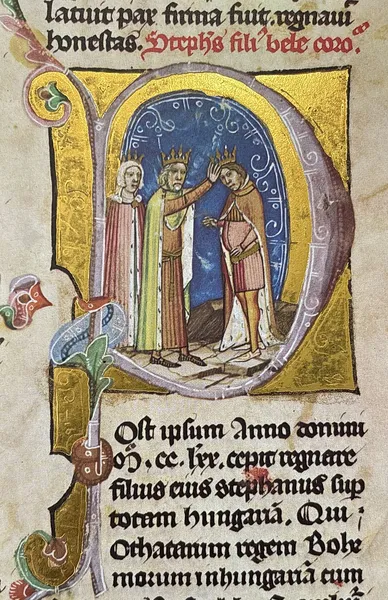
The Hungarian Civil War of 1264–1265 (Hungarian: 1264–1265. évi magyar belháború) was a brief dynastic conflict between King Béla IV of Hungary and his son Duke Stephen at the turn of 1264 into 1265. Béla's relationship with his oldest son and heir, Stephen, became tense in the early 1260s, because the elderly king favored his daughter Anna and his youngest child, Béla, Duke of Slavonia. Stephen accused Béla of planning to disinherit him. After a brief skirmish, Stephen forced his father to cede all the Kingdom of Hungary's lands east of the Danube to him and adopted the title of junior king in 1262. Nevertheless, their relationship remained tense, causing a civil war by the end of 1264. The conflict resulted in Stephen's victory over his father's royal army. They concluded a peace treaty in 1266, which failed to restore confidence between them. Béla died in 1270. The 1264–1265 civil war was one trigger for the emerging feudal anarchy in Hungary by the last decades of the 13th century. Sources seldom mention the civil war. Letters of donation and superficial hints from Hungary, Austrian chronicles and annales briefly record some events without context. Consequently there are several historiographical reconstructions of the chronology of the civil war. This article follows the most accepted reconstruction of the events compiled by historian Attila Zsoldos in his work, the only monograph about the conflict between Béla IV and Stephen.
Also on this shelf
Alexander Romance.
Coptic architecture.
See also
Uncatalogued shelfText from Wikipedia; plate via Wikimedia Commons. Text CC BY-SA 4.0; plate freely licensed (see Commons). Source record. Images and catalogue data are reproduced from open-access collections.