Medieval and Manuscripts
Angels in art
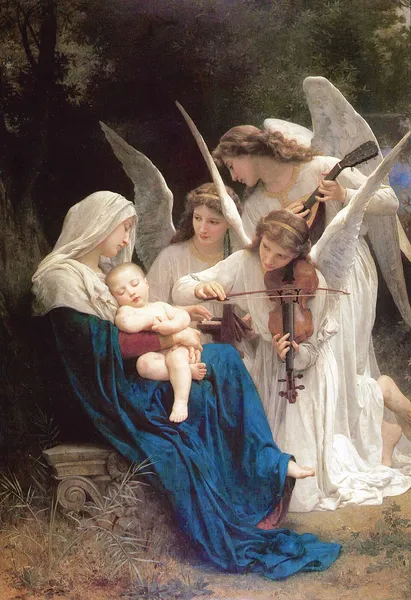
Angels have appeared in works of art since early Christian art, and they have been a popular subject for Byzantine and European paintings and sculpture. Normally given wings in art, angels are usually intended, in both Christian and Islamic art, to be beautiful, though several depictions go for more awe-inspiring or frightening attributes, notably in the depiction of the living creatures (which have bestial characteristics), ophanim (which are wheels) and cherubim (which have mosaic features); As a matter of theology, they are spiritual beings who do not eat or excrete and are genderless. Many historical depictions of angels may appear to the modern eye to be gendered as either male or female by their dress or actions, but until the 19th century, even the most feminine looking angels would normally lack breasts, and the figures were normally considered as genderless. In 19th-century art, especially funerary art, this traditional convention is sometimes abandoned.
Also on this shelf
Freiburg Minster.
Certosa di Pavia.
See also
Uncatalogued shelfText from Wikipedia; plate via Wikimedia Commons. Text CC BY-SA 4.0; plate freely licensed (see Commons). Source record. Images and catalogue data are reproduced from open-access collections.