Medieval and Manuscripts
Architecture of Egypt
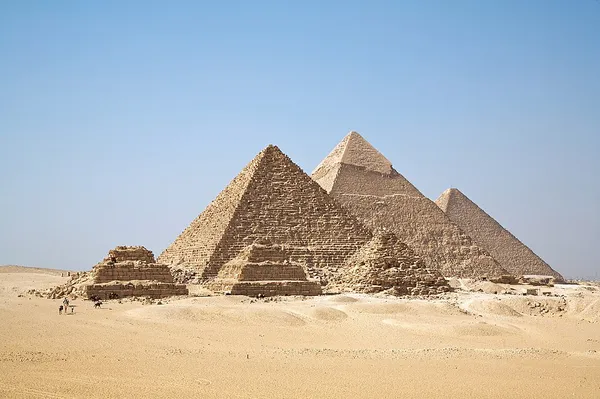
There have been many architectural styles used in Egyptian buildings over the centuries, including Ancient Egyptian architecture, Greco-Roman architecture, Islamic architecture, and modern architecture. Ancient Egyptian architecture is best known for its monumental temples and tombs built in stone, including its famous pyramids, such as the pyramids of Giza. These were built with a distinctive repertoire of elements including pylon gateways, hypostyle halls, obelisks, and hieroglyphic decoration. The advent of Greek Ptolemaic rule, followed by Roman rule, introduced elements of Greco-Roman architecture into Egypt, especially in the capital city of Alexandria. After this came Coptic architecture, including early Christian architecture, which continued to follow ancient classical and Byzantine influences. Following the Muslim conquest of Egypt in the 7th century, Islamic architecture flourished. A new capital, Fustat, was founded; it became the center of monumental architectural patronage thenceforth, and through successive new administrative capitals, it eventually became the modern city of Cairo. Early Islamic architecture displayed a mix of influences, including classical antiquity and new influences from the east such as the Abbasid style that radiated from the Abbasid Caliphate's heartland in Mesopotomia (present-day Iraq) during the 9th century. In the 10th century, Egypt became the center of a new empire, the Fatimid Caliphate. Fatimid architecture initiated further developments that influenced the architectural styles of subsequent periods. Saladin, who overthrew the Fatimids and founded the Ayyubid dynasty in the 12th century, was responsible for constructing the Cairo Citadel, which remained the center of government until the 19th century. During the Mamluk period (13th–16th centuries), a wealth of monumental religious and funerary complexes were built, constituting much of Cairo's medieval heritage today. The Mamluk architectural style continued to linger even after the Ottoman conquest of 1517, when Egypt became an Ottoman province. In the early 19th century, Muhammad Ali began to modernize Egyptian society and encouraged a break with traditional medieval architectural traditions, initially by emulating late Ottoman architectural trends.
Also on this shelf
Dux de Lux.
David Whitney House.
See also
Uncatalogued shelfText from Wikipedia; plate via Wikimedia Commons. Text CC BY-SA 4.0; plate freely licensed (see Commons). Source record. Images and catalogue data are reproduced from open-access collections.