Medieval and Manuscripts
Egyptian Revival architecture
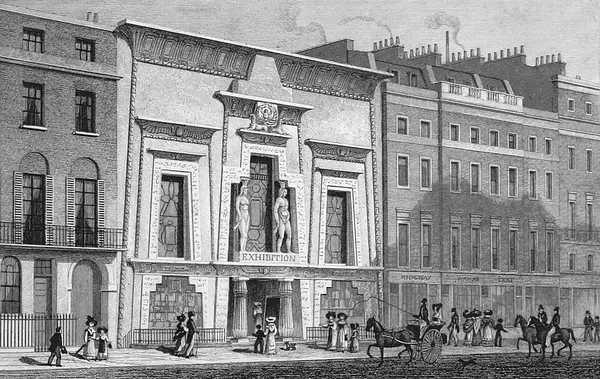
Egyptian Revival is an architectural style that uses the motifs and imagery of ancient Egypt. It is attributed generally to the public awareness of ancient Egyptian monuments generated by Napoleon's invasion of Egypt in 1798, and Admiral Nelson's defeat of the French Navy at the Battle of the Nile later that year. Napoleon took a scientific expedition with him to Egypt. Publication of the expedition's work, the Description de l'Égypte, began in 1809 and was published as a series through 1826. The size and monumentality of the façades discovered during his adventure cemented the hold of Egyptian aesthetics on the Parisian elite. However, works of art and architecture (such as funerary monuments) in the Egyptian style had been made or built occasionally on the European continent since the time of the Renaissance.
Also on this shelf
Culture of medieval Poland.
Inverness Cathedral.
See also
Uncatalogued shelfText from Wikipedia; plate via Wikimedia Commons. Text CC BY-SA 4.0; plate freely licensed (see Commons). Source record. Images and catalogue data are reproduced from open-access collections.