Medieval and Manuscripts
Adoration of the Magi
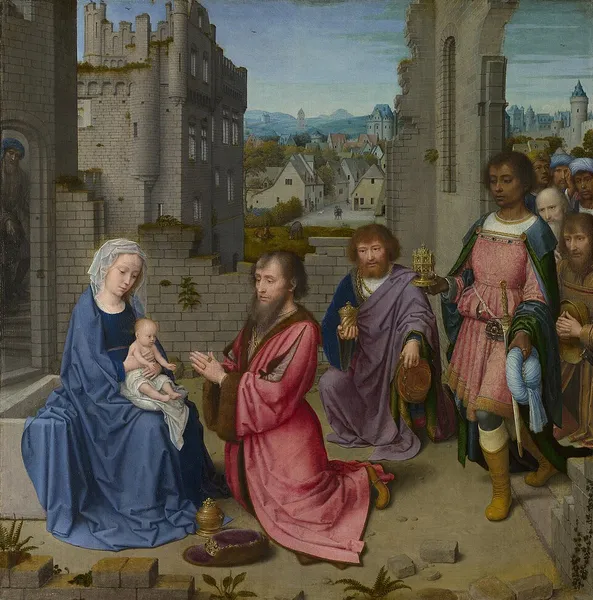
The Adoration of the Magi — also known as the Adoration of the Kings or the Visitation of the Wise Men — is the name traditionally given to a popular subject in the Nativity of Jesus in art. In these depictions, three Magi (traditionally represented as kings, especially in the West), having found Jesus by following a star, lay before him gifts of gold, frankincense, and myrrh, and worship him. The scene originates from the Biblical account in Matthew 2:11: "On entering the house, they saw the child with Mary his mother; and they knelt down and paid him homage. Then, opening their treasure chests, they offered him gifts of gold, frankincense, and myrrh. And having been warned in a dream not to return to Herod, they left for their own country by another path". Christian iconography considerably expanded the bare account of the Biblical Magi described in the Gospel of Matthew (2:1–22). By the later Middle Ages this drew from non-canonical sources like the Golden Legend by Jacobus de Voragine. Artists used the expanded Christian iconography to reinforce the idea that Jesus was recognized, from his earliest infancy, as king of the earth. The adoration scene was often used to represent the Nativity, one of the most indispensable episodes in cycles of the Life of the Virgin as well as the Life of Christ. Stories throughout the Middle Ages started circulating, which speculated who exactly were the three kings who were famous for visiting the Christ child. Many people assumed that they came from somewhere in the east. Eventually it was decided that the three kings would represent the three main continents at the time; Europe, Asia, and Africa. The three names that prevailed over the centuries for the three kings were Gaspar (or Caspar), Melchior, and Balthasar. The prominence of this story, as well as the three kings or magi, is due to the great theological significance that the Biblical story holds, their exotic clothes and looks, as well as their great and expensive gifts. In the church calendar, the event is commemorated in Western Christianity as the Feast of the Epiphany (January 6). The Eastern Orthodox Church commemorates the Adoration of the Magi on the Feast of the Nativity (December 25). The term is anglicized from the Vulgate Latin section title for this passage: A Magis adoratur.
Also on this shelf
Hildegard of Bingen.
Baron.
See also
Uncatalogued shelfText from Wikipedia; plate via Wikimedia Commons. Text CC BY-SA 4.0; plate freely licensed (see Commons). Source record. Images and catalogue data are reproduced from open-access collections.