Medieval and Manuscripts
Catholic Church in Scotland
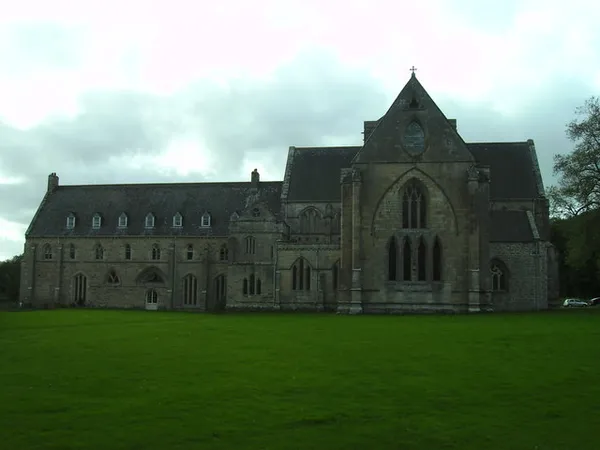
The Catholic Church in Scotland, overseen by the Scottish Bishops' Conference, is part of the worldwide Catholic Church headed by the Pope. Christianity first arrived in Roman Britain and was strengthened by the conversion of the Picts through both the Hiberno-Scottish mission and Iona Abbey. After being firmly established in Scotland for nearly a millennium, the Catholic Church was outlawed by the Scottish Reformation Parliament in 1560. Multiple uprisings in the interim failed to reestablish Catholicism or to legalise its existence. Even today, the Papal Jurisdiction Act 1560, while no longer enforced, still remains on the books. Throughout the nearly three centuries of religious persecution and disenfranchisement between 1560 and 1829, many students for the priesthood went abroad to study while others remained in Scotland. In what is now termed underground education, many attended illegal seminaries. An early seminary upon Eilean Bàn in Loch Morar was moved during the Jacobite rising of 1715 and reopened as Scalan seminary in Glenlivet. After multiple arson attacks by government troops, Scalan was rebuilt in the 1760s by Bishop John Geddes, who later became Vicar Apostolic of the Lowland District, a close friend of national poet Robert Burns, and a well-known figure in the Edinburgh intelligentsia during the Scottish Enlightenment. The successful campaign that resulted in Catholic emancipation in 1829 helped Catholics regain both freedom of religion and civil rights. In 1878, the Catholic hierarchy was formally restored. As the Church was slowly rebuilding its presence in the Gàidhealtachd, the bishop and priests of the Roman Catholic Diocese of Argyll and the Isles, inspired by the Irish Land War, became the ringleaders of a direct action resistance campaign by their parishioners to the Highland Clearances, rackrenting, religious discrimination, and other acts widely seen as abuses of power by Anglo-Scottish landlords and their estate factors. Many Scottish Roman Catholics in the heavily populated Lowlands are the descendants of Irish immigrants and of Scottish Gaelic-speaking migrants from the Highlands and Islands who both moved into Scotland's cities and industrial towns during the nineteenth century, especially during the Highland Clearances, the Highland Potato Famine, and the similar famine in Ireland.
Also on this shelf
Braunschweig.
Grade I listed buildings in Oxford.
See also
Uncatalogued shelfText from Wikipedia; plate via Wikimedia Commons. Text CC BY-SA 4.0; plate freely licensed (see Commons). Source record. Images and catalogue data are reproduced from open-access collections.