Medieval and Manuscripts
List of new churches by John Douglas
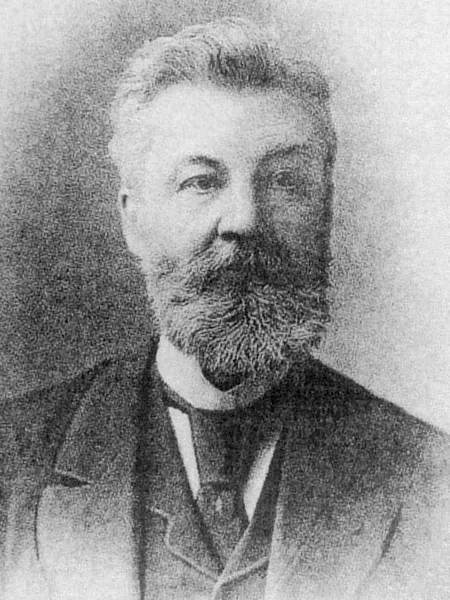
John Douglas (1830–1911) was an English architect based in Chester, Cheshire. His output included new churches, alterations to and restoration of existing churches, church furnishings, new houses and alterations to existing houses, and a variety of other buildings, including shops, banks, offices, schools, memorials and public buildings. Perhaps his best-known design is that for the Eastgate Clock in Chester. His architectural styles were eclectic, but as he worked during the period of the Gothic Revival much of his output incorporates elements of the English Gothic style. He was also influenced by architectural styles from the mainland of Europe, and frequently included elements of French, German, and Netherlandish architecture. Douglas is probably best remembered for his incorporation of vernacular elements in his buildings, in particular half-timbering, in which he was influenced by the black-and-white revival in Chester. Other vernacular elements he employed included tile-hanging, pargeting, and the use of decorative brick in diapering and the design of tall chimney stacks. Of particular importance is Douglas' use of joinery and highly detailed wood carving. John Douglas was born in the Cheshire village of Sandiway and was articled to the Lancaster architect E. G. Paley, later becoming his chief assistant. He established an office in Chester in either 1855 or 1860, from where he practised throughout his career. Initially he ran the office himself but in 1884 he appointed his assistant, Daniel Porter Fordham, as a partner. When Fordham retired in 1897, he was succeeded by Charles Howard Minshull. In 1909 this partnership was dissolved and Douglas ran the office alone until his death in 1911. As his office was in Chester, most of his works were in Cheshire and North Wales, although some were further afield, in Lancashire, Staffordshire, Warwickshire, and Scotland. From an early stage in his career, Douglas attracted commissions from wealthy and powerful patrons, the first of which came from Hugh Cholmondeley, 2nd Baron Delamere. His most important patrons were the Grosvenor family of Eaton Hall, namely Richard Grosvenor, 2nd Marquess of Westminster, Hugh Grosvenor, 1st Duke of Westminster, and Hugh Grosvenor, 2nd Duke of Westminster.
Also on this shelf
Edward Martyn.
First Presbyterian Church (Manhattan).
See also
Uncatalogued shelfText from Wikipedia; plate via Wikimedia Commons. Text CC BY-SA 4.0; plate freely licensed (see Commons). Source record. Images and catalogue data are reproduced from open-access collections.