Medieval and Manuscripts
Italian literature
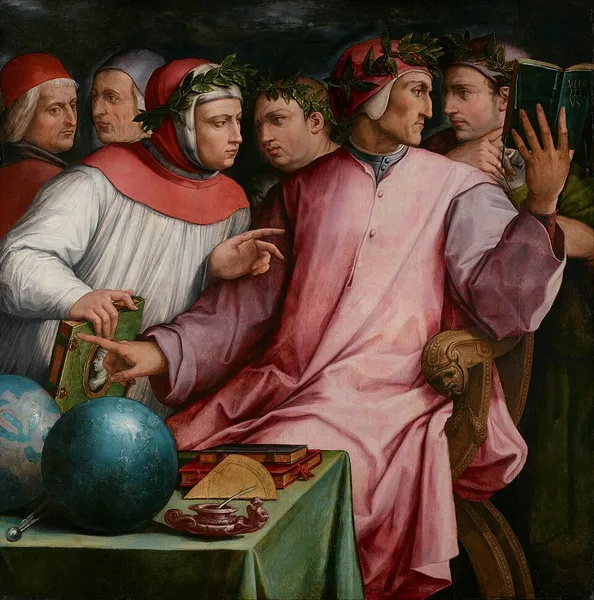
Italian literature is written in the Italian language, particularly within Italy. It may also refer to literature written by Italians or in other languages spoken in Italy, often languages that are closely related to modern Italian, including regional varieties and vernacular dialects. Italian literature began in the 12th century, when in different regions of the peninsula the Italian vernacular started to be used in a literary manner. The Ritmo laurenziano is the first extant document of Italian literature. In 1230, the Sicilian School became notable for being the first style in standard Italian. Renaissance humanism developed during the 14th and the beginning of the 15th centuries. Lorenzo de' Medici is regarded as the standard bearer of the influence of Florence on the Renaissance in the Italian states. The development of the drama in the 15th century was very great. In the 16th century, the fundamental characteristic of the era following the end of the Renaissance was that it perfected the Italian character of its language. Niccolò Machiavelli and Francesco Guicciardini were the chief originators of the science of history. Pietro Bembo was an influential figure in the development of the Italian language. In 1690, the Academy of Arcadia was instituted with the goal of "restoring" literature by imitating the simplicity of the ancient shepherds with sonnets, madrigals, canzonette, and blank verses. In the 18th century, the political condition of the Italian states began to improve, and philosophers disseminated their writings and ideas throughout Europe during the Age of Enlightenment. The leading figure of the 18th century Italian literary revival was Giuseppe Parini. The philosophical, political, and socially progressive ideas behind the French Revolution of 1789 gave a special direction to Italian literature in the second half of the 18th century, inaugurated with the publication of Dei delitti e delle pene by Cesare Beccaria. Love of liberty and desire for equality created a literature aimed at national objects. Patriotism and classicism were the two principles that inspired the literature that began with the Italian dramatist and poet Vittorio Alfieri. The Romantic movement had as its organ the Conciliatore, established in 1818 at Milan. The main instigator of the reform was the Italian poet and novelist Alessandro Manzoni.
Also on this shelf
Erfurt Cathedral.
Galyon Hone.
See also
- ▸Basilica of Our Lady Immaculate
- ▸Black Book of Carmarthen
- ▸Agriculture in Scotland in the Middle Ages
Text from Wikipedia; plate via Wikimedia Commons. Text CC BY-SA 4.0; plate freely licensed (see Commons). Source record. Images and catalogue data are reproduced from open-access collections.