Medieval and Manuscripts
Ethiopia
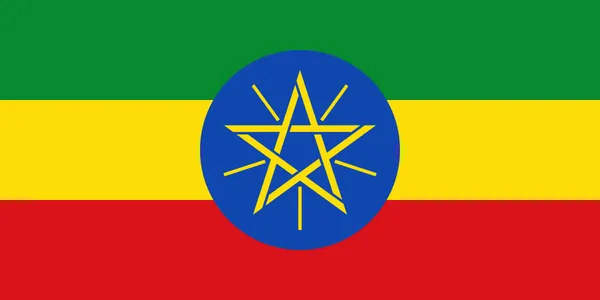
Ethiopia, officially the Federal Democratic Republic of Ethiopia (FDRE), is a landlocked country located in the Horn of Africa region of East Africa. It shares borders with Eritrea to the north, Djibouti to the northeast, Somalia to the southeast, Kenya to the south, South Sudan to the west, and Sudan to the northwest. Ethiopia covers a land area of 1,104,300 km2 (426,400 sq mi). As of 2026, it has around 138 million inhabitants, making it the 10th-most populous country in the world and 2nd most populous country in Africa. The national capital and largest city, Addis Ababa, lies several kilometres west of the East African Rift that splits the country into the African and Somali tectonic plates. Anatomically modern humans emerged in what is now Ethiopia. In 980 BC, the Kingdom of D'mt extended its realm over Eritrea and the northern region of Ethiopia, while the Kingdom of Aksum maintained a unified civilisation in the region for 900 years. Christianity arrived to the kingdom in 330 AD, while Islam gained influence during the first Hijra in 615. After the collapse of Aksum in 960, the Zagwe dynasty ruled the north-central parts of Ethiopia. The Shewan usurper, Yekuno Amlak, overthrew the dynasty in 1270 at the Battle of Ansata, inaugurating the Ethiopian Empire and the Solomonic dynasty – asserting its lineage through Aksumite legitimacy by the biblical Solomon and Queen of Sheba, and Menelik I was the first emperor. Under Emperor Amda Seyon I (r. 1314–1344), the empire grew in prestige through territorial expansion against neighbouring Muslim territories. Later, the Ethiopian–Adal War (1529–1543) weakened the empire and opened the way for the Oromo expansion. The growing influence of the Oromo at the Gondarine court ultimately contributed to the fragmentation known as Zemene Mesafint, beginning in 1769. Emperor Tewodros II ended the Zemene Mesafint at the beginning of his reign in 1855, marking the reunification and modernisation of Ethiopia. In the late 19th century, Ethiopia repelled foreign invasions from both Egypt and Italy, most notably defeating an Italian invasion at the Battle of Adwa in 1896. Under Emperor Menelik II, it also expanded its territory, remaining independent during the Scramble for Africa and establishing its current borders.
Also on this shelf
Basil II.
Coat of arms of Württemberg.
See also
Uncatalogued shelfText from Wikipedia; plate via Wikimedia Commons. Text CC BY-SA 4.0; plate freely licensed (see Commons). Source record. Images and catalogue data are reproduced from open-access collections.