Medieval and Manuscripts
Armenian historiography of the 5th–18th centuries
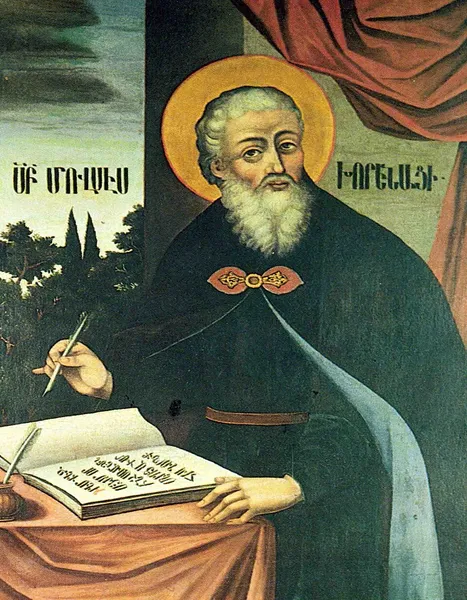
Armenian historiography from the 5th to 18th centuries refers to the body of works by Armenian authors from the 5th to 18th centuries (chronicles, annals, and other sources) dedicated to the history of Armenia itself, while also containing extensive information about neighboring states and regions, including the South Caucasus, Byzantium, and the Middle East. Emerging at the twilight of antiquity, Armenian historiography held a dominant position in medieval Armenian literature. The 5th to 18th centuries encompass the pre-modern period of Armenian historiography. Periods of decline and revival in Armenia's cultural activity corresponded to changes in its political situation. The earliest report of creating a historical narrative in Armenia dates back to the 1st century BCE. The writing, explanation, and preservation of the history of the Armenian people were initially among the primary tasks of the educated class, and the 5th century became the golden age of national literature. During this time, a continuous historiographical tradition emerged, where authors began their narratives from the historical period or date where their predecessors left off. In the mid-6th century, the Armenian ecclesiastical calendar was introduced. From the 7th century, starting with the Arab conquest, due to the circumstances, the works of some historians took on a universal character in both chronological and geographical terms, giving rise to the genres of chronicles and historical geography. A new surge in historiography occurred in the 10th to 14th centuries, primarily associated with the restoration of the Armenian state first by the Bagratids and later in Cilicia. The 14th century marked a period of decline, linked to the invasions of Tatar-Mongol tribes and the Mamluk incursion, lasting over two centuries, during which no significant historical works were produced. The historical literature of this period consists mainly of minor chronicles and manuscript colophons. The next revival of historiography occurred in the 17th century.
Also on this shelf
All Saints' Anglican Church, Derrinallum.
Croatian Fraternal Union Building.
See also
Uncatalogued shelfText from Wikipedia; plate via Wikimedia Commons. Text CC BY-SA 4.0; plate freely licensed (see Commons). Source record. Images and catalogue data are reproduced from open-access collections.