Medieval and Manuscripts
Byzantine literature of the Laskaris and Palaiologos periods
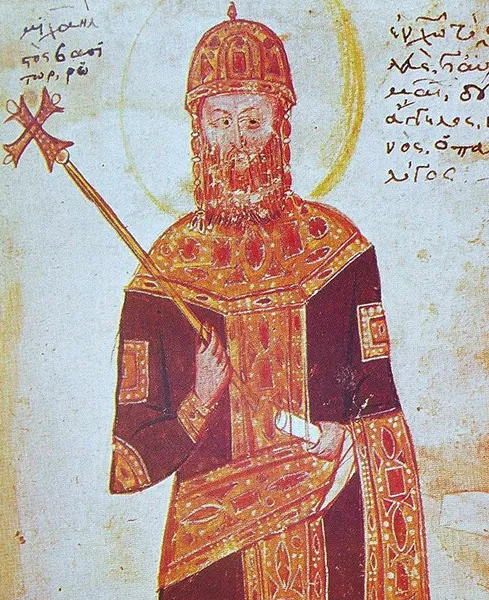
Byzantine literature of the Laskaris and Palaiologos periods was the final period of Byzantine literature, from the conquest of Constantinople by the Crusaders in 1204 to the fall of Constantinople in 1453. After the Crusader conquest of Constantinople in 1204, in the following years, the Byzantine state was revived in Anatolia with its center in Nicaea. The years of the Nicaean Empire were primarily a period of collecting the dispersed legacy. The most prominent authors of this period include the historian and theologian Niketas Choniates and the polymath Nikephoros Blemmydes. In the final decades of the Byzantine Empire, local centers gained importance as the capital weakened. On Rhodes, Emanuel Georgilas Limenites created, and the Rhodesian Love Songs were composed. From Crete came the Notes and Stanzas of Stephanos Sahlikis. In Mystras, at the court of the Despotate of the Morea, Mazaris wrote his satire, and the philosopher Gemistos Plethon, a proponent of Neoplatonism and pagan Hellenism, influenced Renaissance Italy. His students, Bessarion and John Argyropoulos, defended Plato in Italy, while Gennadius Scholarius and George of Trebizond critiqued Plethon. The turn of the 14th and 15th centuries saw the last romances inspired by French models, such as Floris and Blanchefleur and Imberios and Margaron. At the same time, there was a shift to Greek themes, with Emanuel Georgilas Limenites' Historical Tale of Belisarius and the widely popular Tale of the Suffering Apollonius of Tyre. Historians such as George Sphrantzes and Laonikos Chalkokondyles wrote from differing perspectives, with the last significant historian, Michael Critobulus, documenting Sultan Mehmed II's reign. Several works remain about the struggles with the Turks, including The Tale of the Siege of Constantinople and The Conquest of Constantinople, likely by Emanuel Limenites.
Also on this shelf
Enniscorthy.
Chafariz d'El-Rey.
See also
Uncatalogued shelfText from Wikipedia; plate via Wikimedia Commons. Text CC BY-SA 4.0; plate freely licensed (see Commons). Source record. Images and catalogue data are reproduced from open-access collections.