Medieval and Manuscripts
Ethiopian Empire
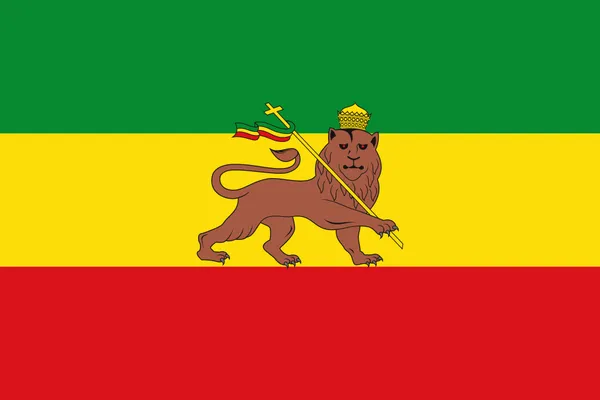
The Ethiopian Empire, historically known as Abyssinia or simply Ethiopia, was a country that encompassed the present-day territories of Ethiopia and Eritrea. It existed from the establishment of the Solomonic dynasty by Yekuno Amlak around 1270 until the 1974 coup d'état by the Derg, which ended the reign of the final Emperor, Haile Selassie. In the late 19th century, under Emperor Menelik II, the empire expanded significantly to the south, and in 1952, Eritrea was federated under Selassie's rule. Despite being surrounded by hostile forces throughout much of its history, the empire maintained a kingdom centered on its ancient Christian heritage. Founded in 1270 by Yekuno Amlak, who claimed to descend from the last Aksumite king and ultimately King Solomon and the Queen of Sheba, it replaced the Agaw kingdom of the Zagwe. While initially a rather small and politically unstable entity, the Empire managed to expand significantly under the crusades of Amda Seyon I (1314–1344) and Dawit I (1382–1413), temporarily becoming the dominant force in the Horn of Africa. The Ethiopian Empire would reach its peak during the long reign of Emperor Zara Yaqob (1434–1468). He consolidated the conquests of his predecessors, built numerous churches and monasteries, encouraged literature and art, centralized imperial authority by substituting regional warlords with administrative officials, and significantly expanded his hegemony over adjacent Islamic territories. The neighboring Muslim Adal Sultanate began to threaten the empire by repeatedly attempting to invade it, finally succeeding under Imam Mahfuz. Mahfuz's ambush and defeat by Emperor Lebna Dengel brought about the early 16th-century jihad of the Ottoman-supported Adalite Imam Ahmed Gran, who was defeated in 1543 with the help of the Portuguese. Greatly weakened, much of the Empire's southern territory and vassals were lost due to the Oromo migrations. In the north, in what is now Eritrea, Ethiopia managed to repulse Ottoman invasion attempts, although losing its access to the Red Sea to them. Reacting to these challenges, in the 1630s Emperor Fasilides founded the new capital of Gondar, marking the start of a new golden age known as the Gondarine period. It saw relative peace, the successful integration of the Oromo and a flourishing of culture.
Also on this shelf
Gaelic Ireland.
Holy Trinity Cathedral, Auckland.
See also
- ▸Byzantine Empire under the Palaiologos dynasty
- ▸Interior with a Woman Weighing Gold Coin
- ▸History of Tyre, Lebanon
Text from Wikipedia; plate via Wikimedia Commons. Text CC BY-SA 4.0; plate freely licensed (see Commons). Source record. Images and catalogue data are reproduced from open-access collections.