Medieval and Manuscripts
List of Category A listed buildings in Glasgow
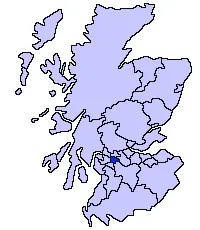
This is a list of Category A listed buildings in Glasgow, Scotland. In Scotland, the term listed building refers to a building or other structure officially designated as being of "special architectural or historic interest". Category A structures are those considered to be "buildings of national or international importance, either architectural or historic, or fine little-altered examples of some particular period, style or building type." Listing was begun by a provision in the Town and Country Planning (Scotland) Act 1947, and the current legislative basis for listing is the Planning (Listed Buildings and Conservation Areas) (Scotland) Act 1997. The authority for listing rests with Historic Scotland, an executive agency of the Scottish Government, which inherited this role from the Scottish Development Department in 1991. Once listed, severe restrictions are imposed on the modifications allowed to a building's structure or its fittings. Listed building consent must be obtained from local authorities prior to any alteration to such a structure. There are approximately 47,400 listed buildings in Scotland, of which around 8% (some 3,800) are Category A. The medieval city of Glasgow formed around two axes, that of the High Street and the Saltmarket which was bisected by Trongate and Gallowgate at Glasgow Cross. Despite its ancient origins very little of the medieval fabric of the city survives. Only two buildings from the earliest period are extant in Glasgow; the Cathedral and the former canon's house. Nor do the riggs and wynds of the old city remain, though a great deal of the original street pattern has persisted down the centuries. Additionally, a mere handful of buildings from the period between the Reformation and the end of the eighteenth century have come down to us. The majority of the city's building stock, then, is nineteenth century when the population of Glasgow rose from c. 78,000 in 1801 to 770,000 in 1901. The pattern of expansion can be traced from the commercial centre of the High Street and Merchant City westwards to the Blythswood Hill New Town laid out in the 1820s and 30s, and south of the river in Laurieston and Tradeston. The feus of both these developments were, unusually for the British Isles, laid out on a gridiron pattern.
Also on this shelf
Baron of Denboig.
Chelsea, Manhattan.
See also
Uncatalogued shelfText from Wikipedia; plate via Wikimedia Commons. Text CC BY-SA 4.0; plate freely licensed (see Commons). Source record. Images and catalogue data are reproduced from open-access collections.