Medieval and Manuscripts
Grade I listed churches in Cumbria
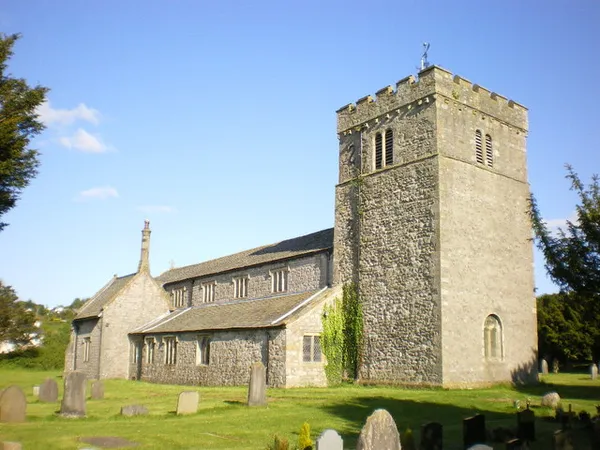
Cumbria is a county in North West England. It was created in 1974 from the historical counties of Westmorland and Cumberland, together with the Furness area of Lancashire and the Sedbergh Rural District of the West Riding of Yorkshire. Its largest settlement is the county town of Carlisle. Buildings in England are given listed building status by the Secretary of State for Culture, Media and Sport, acting on the recommendation of Historic England. Listed status gives the structure national recognition and protection against alteration or demolition without authorisation. Grade I listed buildings are defined as being of "exceptional interest, sometimes considered to be internationally important"; only 2.5 per cent of listed buildings are included in this grade. There have been Christian churches in Cumbria since the Anglo-Saxon era. Anglo-Saxon elements to be found in the churches include the lower parts of the towers of St Michael, Beetham, and St Laurence, Morland. Many of the churches have Norman features, including the tower of St Michael, Barton, the north arcade of St Andrew, Crosby Garrett, the crossing of St Lawrence, Crosby Ravensworth, much of St John the Evangelist, Crosscanonby, the north arcade and three doorways of St Mary, Kirkby Lonsdale, and a doorway, the arcades and the chancel arch of St Michael, Torpenhow. Gothic features are found in churches that originated at a later date, such as All Saints, Boltongate, and in additions to older churches, such as St Lawrence, Appleby, St Michael, Burgh by Sands, and Carlisle Cathedral. St James, Whitehaven, is in Georgian style, as is the nave of St Andrew, Penrith. Gothic Revival features can be found in churches that were restored or altered during the 19th century, and include the north transept added to St Michael, Muncaster by Anthony Salvin, additions to St Martin, Bowness-on-Windermere by Paley and Austin, and William Butterfield's restoration of St Bridget, Brigham. The most modern church in the list is St Martin, Brampton, which was built between 1874 and 1878, and is the only church designed by Philip Webb, using a variety of architectural styles. Cumbria is predominantly rural, and has the largest national park in England and Wales, the Lake District.
Also on this shelf
Archdiocesan Shrine of Espiritu Santo.
Cathedral Basilica of the Assumption (Covington, Kentucky).
See also
Uncatalogued shelfText from Wikipedia; plate via Wikimedia Commons. Text CC BY-SA 4.0; plate freely licensed (see Commons). Source record. Images and catalogue data are reproduced from open-access collections.