Maritime History
Fluyt
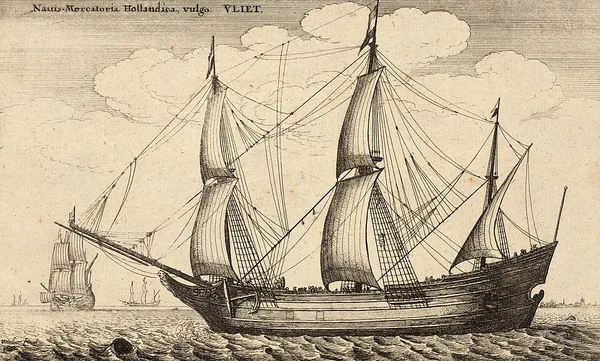
A fluyt (archaic Dutch: fluijt "flute"; Dutch pronunciation: [flœyt] ) is a Dutch type of sailing vessel originally designed by the shipwrights of Hoorn as a dedicated cargo vessel. Originating in the Dutch Republic in the 16th century, the vessel was designed to facilitate transoceanic delivery with the maximum of space and crew efficiency. Unlike its rivals, it was not built for conversion in wartime to a warship, so it was simpler and cheaper to build and carried twice the cargo, and could be handled by a smaller crew. Construction by specialized shipyards using new tools made it half the cost of rival ships. These factors combined to sharply lower the cost of transportation for Dutch merchants, giving them a major competitive advantage, particularly with bulk goods. The fluyt was a significant factor in the 17th-century rise of the Dutch seaborne empire. In 1670 the Dutch merchant marine totalled 568,000 tons of shipping—about half the European total.
Also on this shelf
HMS Ajax (1798).
Chennai Mofussil Bus Terminus.
See also
Uncatalogued shelfText from Wikipedia; plate via Wikimedia Commons. Text CC BY-SA 4.0; plate freely licensed (see Commons). Source record. Images and catalogue data are reproduced from open-access collections.