Maritime History
History of Lorient
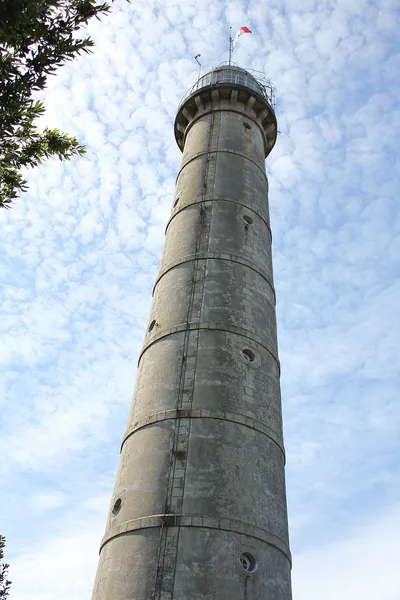
The history of Lorient begins with the town's foundation in 1666 as a base for the French East India Company. This role was reinforced in 1675 during the Dutch War, when it was decided to abandon the company's other base in Le Havre in favor of Lorient alone. Other monopoly trading companies subsequently moved in and used the port and surrounding enclosure until the end of the Ancien Régime, helping to provide the town with its facilities; the site thus became the main agglomeration in southern Brittany from the mid-18th century onwards. From 1688, the port was also used by the Royal Navy, which had its ships built and armed there. Lorient's political influence grew stronger after the French Revolution, and the city took on an administrative role under the First Empire. While commercial activities remained low-key in the first half of the 19th century due to frequent conflicts, military activities gained in importance. The arsenals benefited from successive waves of modernization driven by steam power, followed by steel construction. From the end of the 19th century, the development of the fishing industry brought a new pole of activity to the town, which was strengthened by the creation of the Keroman fishing port in the early 1920s. The Second World War was a key period in the town's history. The Keroman peninsula was chosen by the occupying forces to house the largest submarine base of the time, leading to the almost total destruction of the town by Allied bombing between January and February 1943. The occupation of the city lasted until the surrender of the Lorient pocket on May 10, 1945. This marked the start of an era of reconstruction that would create a new face for the city, lasting until the early 1960s. The town's recent history has been marked by a series of successive crises, caused by the decline in activity at the Keroman fishing port in the 1980s and 1990s, and the closure of the submarine base in 1997. The city then embarked on a phase of reconversion, marked by cultural development driven by its Interceltic Festival, university development driven by the opening of the University of Southern Brittany in 1995, and economic development based on activities linked to yachting and offshore racing.
Also on this shelf
Albert Hastings Markham.
Douglas Head Lighthouse.
See also
Uncatalogued shelfText from Wikipedia; plate via Wikimedia Commons. Text CC BY-SA 4.0; plate freely licensed (see Commons). Source record. Images and catalogue data are reproduced from open-access collections.