Maritime History
Brixham
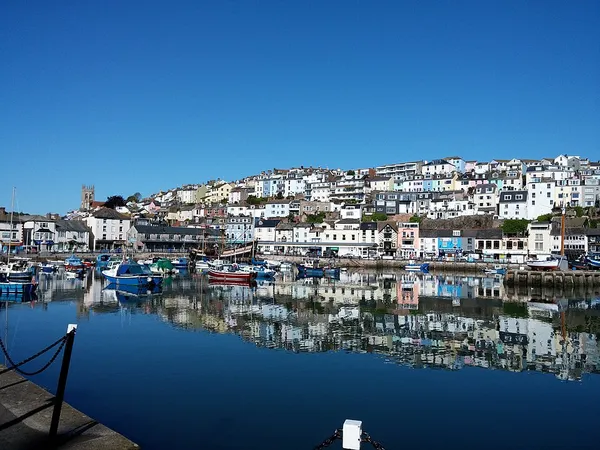
Brixham is a coastal town and civil parish in the borough of Torbay in the county of Devon, in the south-west of England. As of the 2021 census, Brixham had a population of 16,825. It is one of the main three centres of the borough, along with Paignton and Torquay. It is believed that the name Brixham originates from the personal name of an early resident, Brioc, followed by the Old English suffix, ham meaning home. The town, which is predominantly hilly, is built around a natural harbour, which in addition to leisure craft, provides anchorage for what is now one of England's (but not the UK's) largest remaining commercial fishing fleets. A conspicuous local tourist attraction is the permanently moored replica of Sir Francis Drake's ship Golden Hind. Historically, Brixham was made up of two separate communities connected by a marshy lane. In Fishtown, in the immediate vicinity of the harbour, the residents made a living mainly from fishing and related trades, as the name suggests. Cowtown, one mile (1.6 km) inland in the vicinity of what is now St Mary's Square, made its living from agriculture. Cowtown is on the road out of town to the south-west in the direction of Kingswear. St Mary's Square is overlooked by a sizeable church standing on the site of a Saxon original. On 5 November 1688, the Dutch stadtholder William of Orange landed in Brixham with 40,000 soldiers, sailors, and volunteers, before marching on London, where he was crowned King William III as part of the Glorious Revolution.
Also on this shelf
Greater Chennai Police.
Bali Strait incident.
See also
Uncatalogued shelfText from Wikipedia; plate via Wikimedia Commons. Text CC BY-SA 4.0; plate freely licensed (see Commons). Source record. Images and catalogue data are reproduced from open-access collections.