Maritime History
Convoy PQ 17
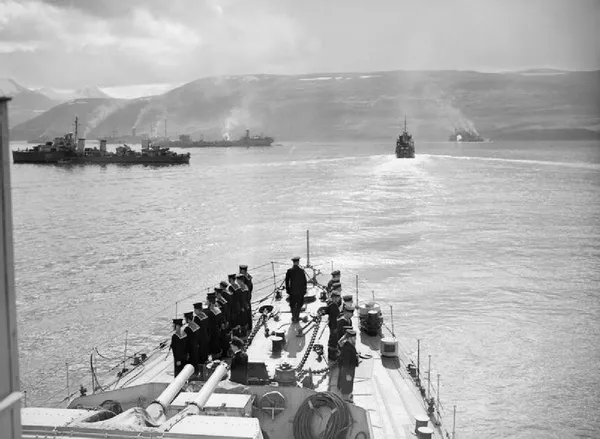
Convoy PQ 17 (27 June – 10 July 1942) was an Allied Arctic convoy during the Second World War. The convoy was the first large joint Anglo–American naval operation under British command. The ships sailed from Hvalfjörður, Iceland, for the Arkhangelsk in the Soviet Union. The convoy was located by German forces on 1 July, shadowed and attacked. The First Sea Lord, Admiral Sir Dudley Pound was told that German ships, including the German battleship Tirpitz, were moving to intercept the convoy. He ordered the cruiser cover and the destroyers of the close escort to concentrate on the Home Fleet heavy cover to the west and instructed the convoy to scatter. The destruction wrought by aircraft and U-boats led to the German ship operation being cancelled as superfluous on 5 July. Of the 35 ships, only eleven reached their destination, delivering 70,000 long tons (71,000 t) of cargo. The convoy disaster demonstrated the difficulty of sending Arctic convoys to the Soviet Union, during the summer, with its relatively milder weather and the midnight sun, that the Admiralty had frequently warned the War Cabinet.
Also on this shelf
Gudhjem.
German submarine U-193.
See also
Uncatalogued shelfText from Wikipedia; plate via Wikimedia Commons. Text CC BY-SA 4.0; plate freely licensed (see Commons). Source record. Images and catalogue data are reproduced from open-access collections.