Maritime History
Darłowo
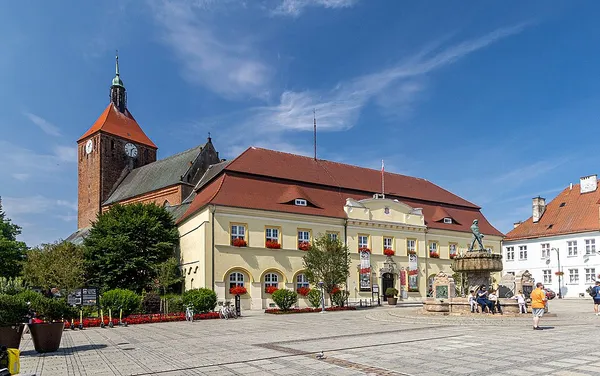
Darłowo (Polish: [darˈwɔvɔ] ; Kashubian: Dërłowò; German: Rügenwalde) is a seaside town on the Slovincian Coast of north-western Poland, south of the Baltic Sea, with 13,324 inhabitants as of December 2021. Administratively, it is located in Sławno County in West Pomeranian Voivodeship. The earliest archaeological signs of a settlement in the area occurred when Roman merchants travelled along the Amber Road in the hope of trading precious metals like bronze and silver for amber. By the 11th century the location of the later town was already becoming a significant trading point. Over the years Dukes of Pomerania constructed a Ducal Castle on a nearby island and chose it as their seat. It was here that the largest artillery piece in the world, Schwerer Gustav, was constructed and tested by Nazi Germany during World War II. The original medieval outline of Darłowo has been preserved to this day. The Old Town, Ducal Castle and local beaches are popular among holidaymakers. Darłowo is also an important historical centre as it is the birthplace and burial site of Eric of Pomerania, King of Denmark, Sweden and Norway.
Also on this shelf
Hornby Dock.
Economy of ancient Greece.
See also
Uncatalogued shelfText from Wikipedia; plate via Wikimedia Commons. Text CC BY-SA 4.0; plate freely licensed (see Commons). Source record. Images and catalogue data are reproduced from open-access collections.