Maritime History
British Iron Age
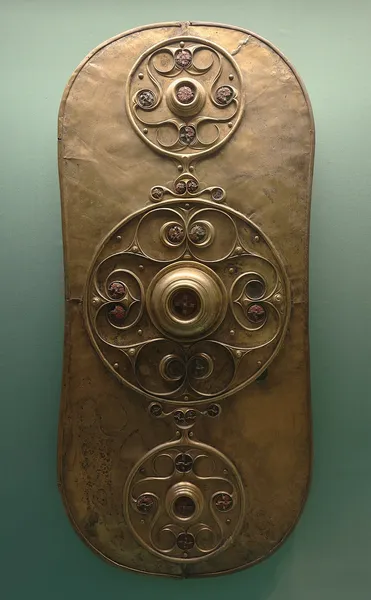
The Iron Age in Great Britain spanned from c. 800 BC until the Roman period in the 1st century AD. It followed the British Bronze Age and was marked by the use of iron for tools and weapons. The Iron Age saw the adoption of some elements of the Hallstatt and La Tène material cultures from mainland Europe, a marked increase in the building of hillforts, and the emergence of brochs in Iron Age Scotland. The British Iron Age excludes prehistoric Ireland, which had its own Iron Age cultures. The protohistory of Britain begins during the late Iron Age. The earliest known account was by Greek geographer Pytheas, (c. 320 BC), who refers to the island as Albion, one of the Pretannikai nesoi (Pretannic isles), and describes its inhabitants as Keltoi (Celts). Most of the Iron Age inhabitants of Britain were Insular Celts and are referred to as Celtic Britons, as they spoke Celtic languages and had broadly Celtic cultural traits. The Britons, speakers of Common Brittonic, were made up of many tribes and kingdoms, and followed an ancient Celtic religion overseen by druids. Some of the southern tribes had links with Gaul and Belgica, and minted coins. There was also some Gallic and Belgic settlement in Britain. The Iron Age ended in most of Britain with the Roman conquest which began in 43 AD.
Also on this shelf
Ballycastle, County Antrim.
German submarine U-193.
See also
Uncatalogued shelfText from Wikipedia; plate via Wikimedia Commons. Text CC BY-SA 4.0; plate freely licensed (see Commons). Source record. Images and catalogue data are reproduced from open-access collections.