Maritime History
History of Bermuda
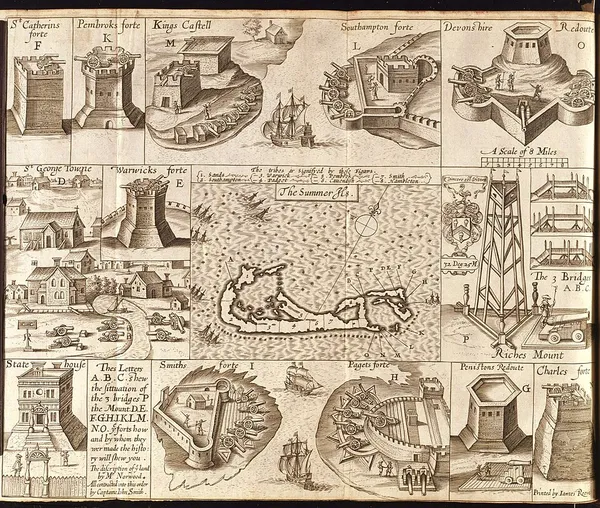
The recorded history of Bermuda dates back to 1503, when it was written about by the Spanish explorer Juan de Bermúdez, whose surname was used as the island's namesake. Having never been settled by indigenous Caribbeans, Bermuda remained uninhabited until Sea Venture, a merchant ship of the Virginia Company on the Third Supply mission to the English colony of Virginia, wrecked on a reef near the island on 3 August 1609. The crew and passengers of Sea Venture settled on Bermuda for nine months, resulting in the island becoming a permanent part of the English colonial empire. Bermuda's first capital, St. George's, was established in 1612. The Virginia Company administered Bermuda as an extension of the colony of Virginia until 1614 and the company's corporate spin-off, the Somers Isles Company, took over in 1615 and managed the island until 1684 when the company's charter was revoked and Bermuda became a Crown colony. Bermuda remained under Crown rule but developed and maintained a degree of autonomy from officials in London. When Newfoundland joined Canada in 1949 Bermuda became the oldest remaining British colony, and has been the most populous remaining dependent territory of Britain since the handover of Hong Kong to China in 1997. Bermuda became a British Overseas Territory in 2002 as a result of the British Overseas Territories Act 2002.
Also on this shelf
Cooktown, Queensland.
Cargo ship.
See also
Uncatalogued shelfText from Wikipedia; plate via Wikimedia Commons. Text CC BY-SA 4.0; plate freely licensed (see Commons). Source record. Images and catalogue data are reproduced from open-access collections.