Maritime History
History of Guernsey
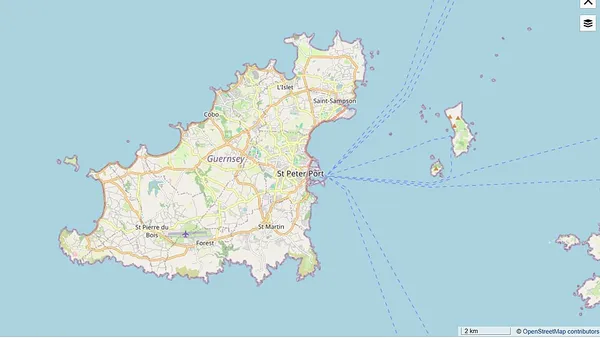
The history of Guernsey dates to prehistoric times, with evidence of Neolithic occupation and later Roman occupation. Tradition credits Saint Sampson with introducing Christianity to the island. Guernsey became part of the Duchy of Normandy and remained under the rule of William the Conqueror after he became king of England. In subsequent centuries, warfare and attacks by pirates and naval forces disrupted trade and prompted the construction of fortifications and the establishment of the Guernsey militia. After mainland Normandy came under French control in the thirteenth century, Guernsey remained under the English Crown. During the English Civil War, most of Guernsey supported the Parliamentarians, while the garrison of Castle Cornet supported the Royalists. Privateering and maritime trade contributed to the island's prosperity during the Napoleonic Wars. Quarrying, horticulture, and tourism subsequently became important industries, while English gradually displaced Guernésiais as the principal language. Guernsey was occupied by German troops during the Second World War. In the post-war period, its economy was rebuilt around tourism, agriculture and trade, followed by the growth of the finance industry.
Also on this shelf
HMS Wellesley (1815).
HMS Endymion (1779).
See also
Uncatalogued shelfText from Wikipedia; plate via Wikimedia Commons. Text CC BY-SA 4.0; plate freely licensed (see Commons). Source record. Images and catalogue data are reproduced from open-access collections.